Health Impacts
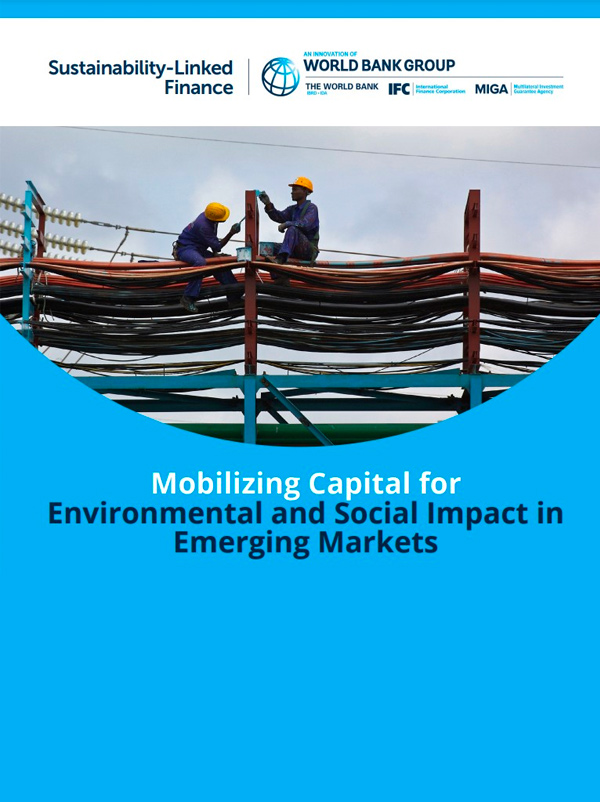
Brochure | Sustainability-linked Finance
Sustainability-linked finance (SLF) is a powerful tool for mobilizing capital as the world moves towards a greener global future. SLF incentivizes companies to pursue ambitious, long-term environmental and social goals, and its use can help countries achieve the 2030 UN Sustainable Development Goals.
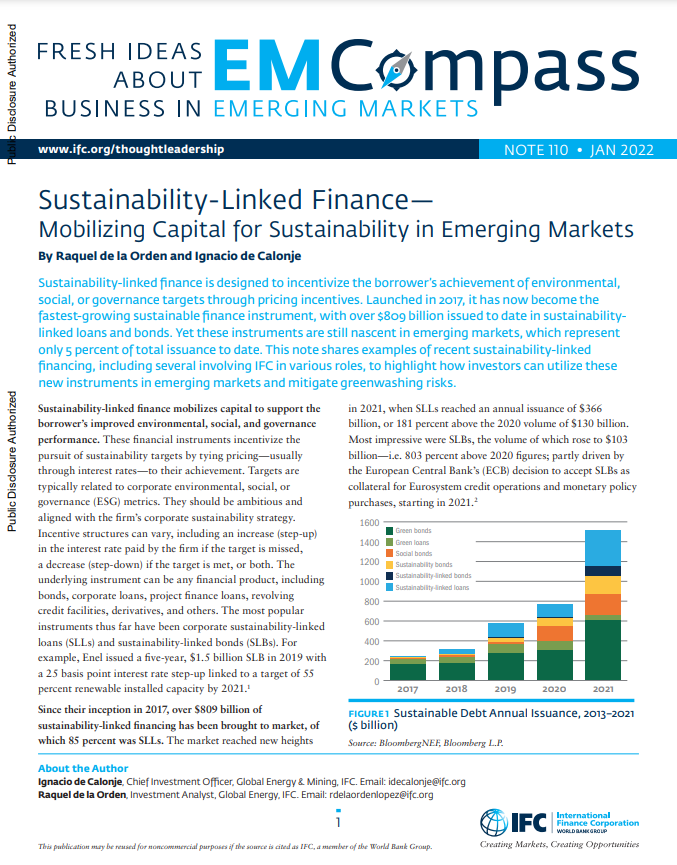
Sustainability-Linked Finance—Mobilizing Capital for Sustainability in Emerging Markets
This note shares examples of recent sustainability-linked financing, including several involving IFC in various roles, to highlight how investors can utilize these new instruments in emerging markets and mitigate greenwashing risks.
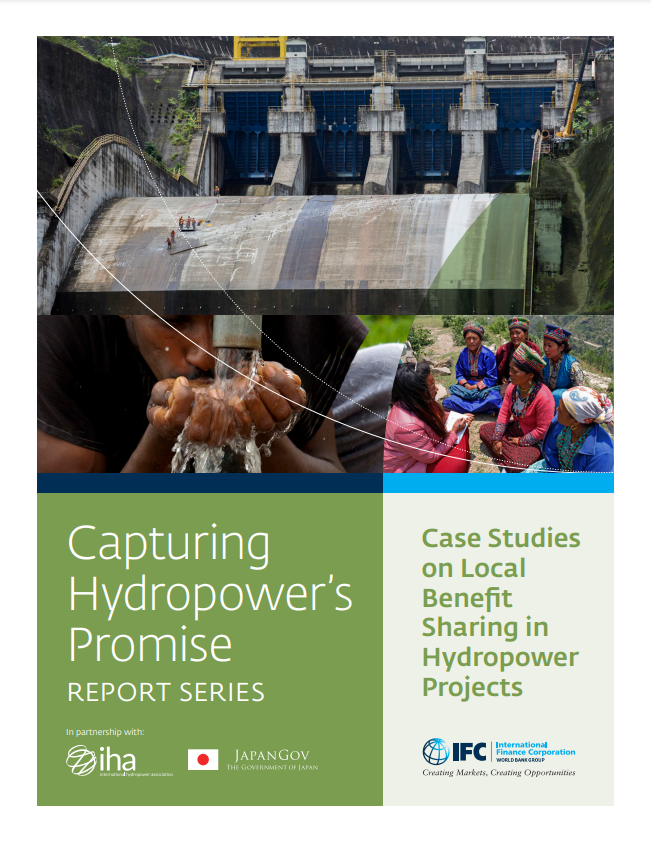
Capturing Hydropower’s Promise: Report Series
The series Capturing Hydropower’s Promise features suggested approaches on implementing local benefit sharing in hydropower projects, along with good practice examples.
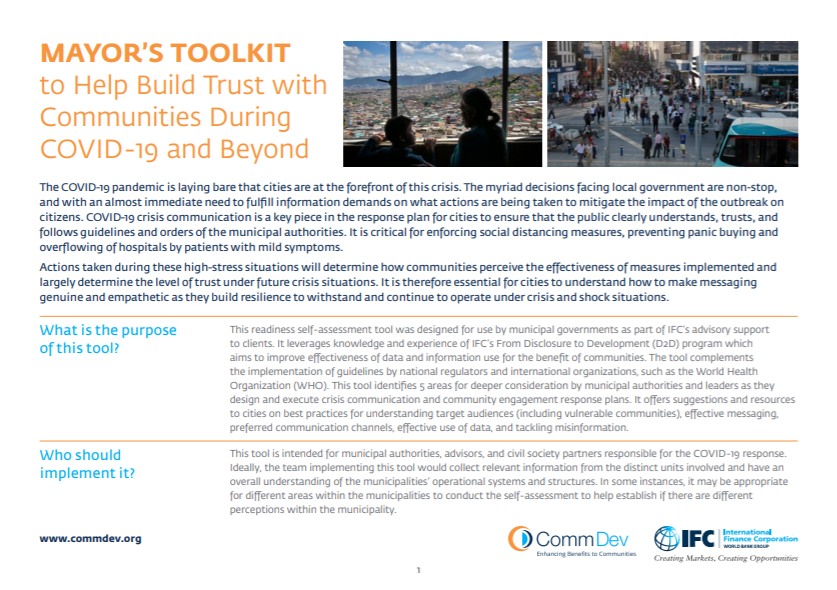
Mayor’s Toolkit to Help Build Trust with Communities During COVID-19 and Beyond
This readiness self-assessment tool was designed for use by municipal governments as part of IFC’s advisory support to clients. It leverages knowledge and experience of IFC’s From Disclosure to Development (D2D) program which aims to improve effectiveness of data and information use for the benefit of communities. The tool complements the implementation of guidelines by […]
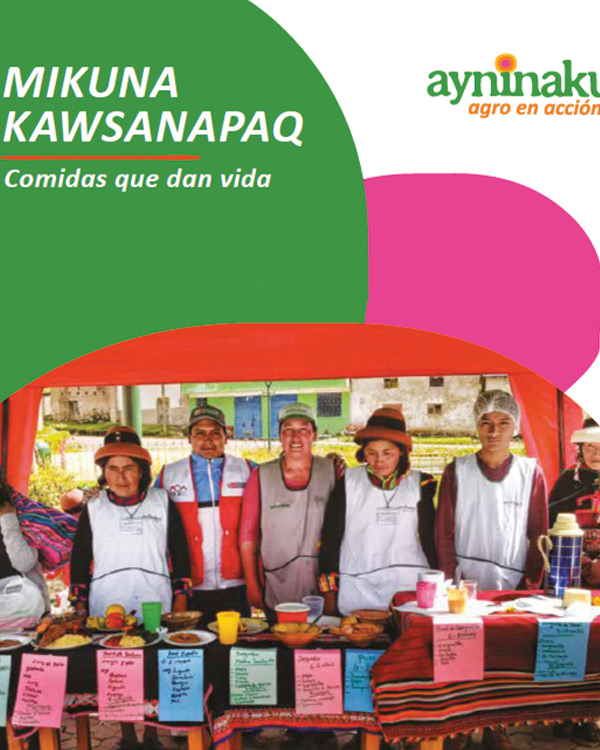
Mikuna Kawsanapaq Recipe Book
This recipe book includes the most innovative nutritious menus created by farmer families from Apurimac.
Global Youth Wellbeing Index 2017
To offer a comprehensive view of successes and gaps for youth worldwide, the 2017 Global Youth Wellbeing Index includes 29 countries and covers seven domains: gender equality, economic opportunity, education, health, citizen participation, safety and security, and information and communication technology.
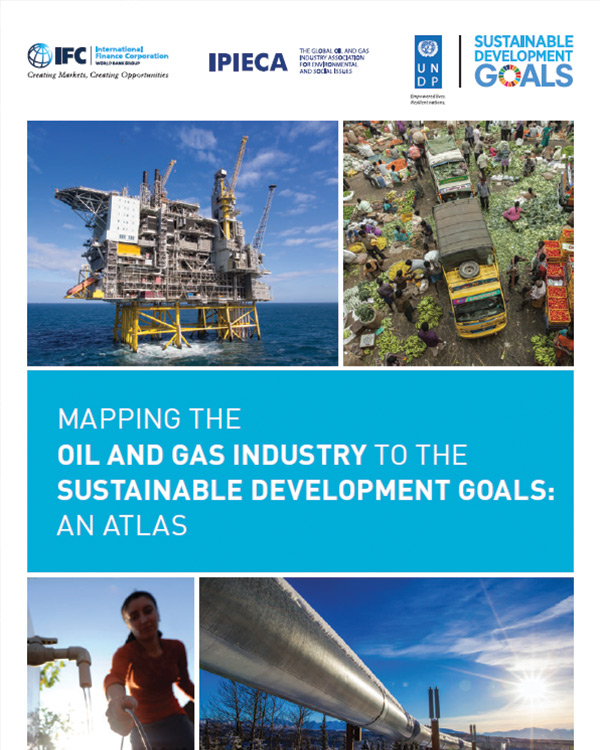
Mapping the Oil and Gas Industry to the Sustainable Development Goals: An Atlas
Achieving the SDGs by the target of 2030 will require unprecedented cooperation and collaboration among governments, non-governmental organizations, development partners, the private sector and communities.
[Draft for Public Comment] Mapping the Oil and Gas Industry to the Sustainable Development Goals: An Atlas
Together with the United Nations Development Programme (UNDP) and IPIECA (the global oil and gas industry association for environmental and social issues), IFC has released for public review and commenting a draft report on how the oil and gas industry contributes to the Sustainable Development Goals (SDGs).
Mapping Mining to the Sustainable Development Goals: An Atlas
This Atlas maps the relationship between mining and the Sustainable Development Goals (SDGs) by using examples of good practice in the industry and existing knowledge and resources in sustainable development that if replicated or scaled up could make useful contributions to the SDGs.
Mapping Mining to the Sustainable Development Goals: A Preliminary Atlas
The draft report is a collection of maps to help mining companies navigate where their products and activities – from exploration, through mining itself, to end products and eventually mine closure – can help the world achieve the SDGs.
SUSTAIN: Cutting-edge business solutions magazine in Agribusiness
How can companies across the world achieve stronger performance while addressing sustainability challenges? How can they learn from each other?
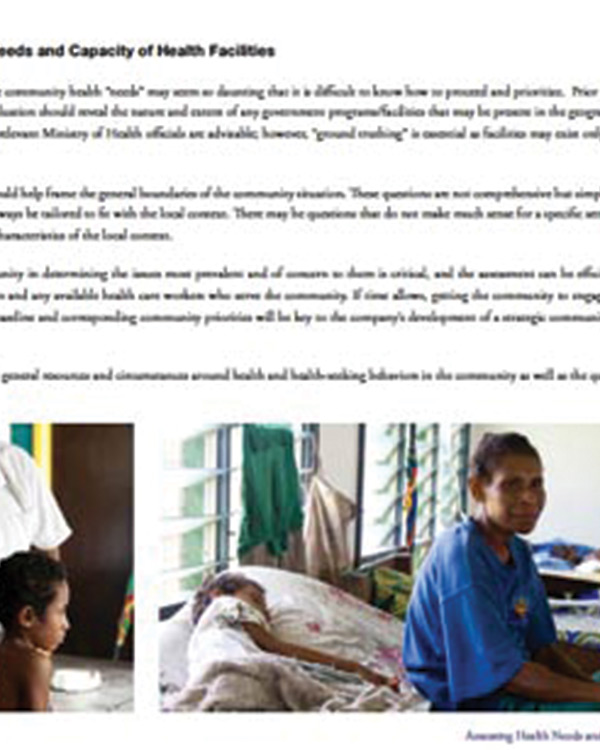
Community Health Assessment and Management
Companies often rely on local government support for provision of basic health services to communities around the project areas.
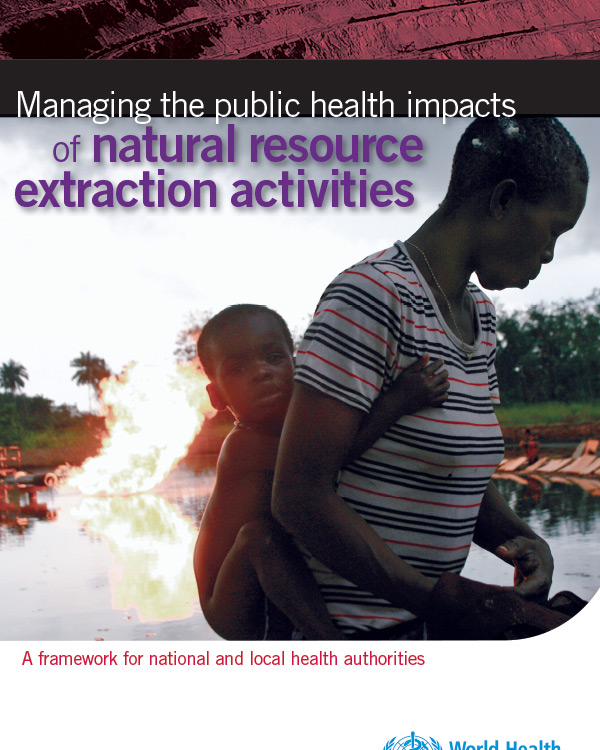
Managing the public health impacts of natural resource extraction activities
A framework for national and local health authorities
