
Gender
Women in Infrastructure Funds: An Opportunity Hiding in Plain Sight
Women hold just 12% of investment committee seats and 23% of investment professional roles across emerging market infrastructure funds – and the policies to change this are largely absent. This paper, produced jointly by IFC and Oliver Wyman, establishes the first dedicated baseline on women’s representation in this asset class, drawing on original data from […]
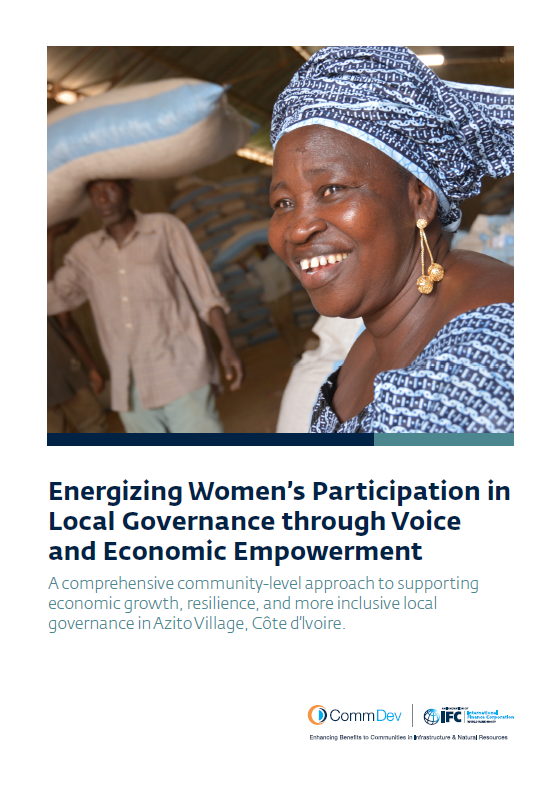
Azito: Energizing Women’s Participation in Local Governance through Voice and Economic Empowerment
The case study “Energizing Women’s Participation in Local Governance through Voice and Economic Empowerment” highlights a collaborative initiative between Azito Energie and the IFC in Azito Village, Côte d’Ivoire. The project aimed to foster inclusive governance and socio-economic growth by empowering women and youth. Historically excluded from decision-making, these groups received training in financial literacy, […]
Building a Future for Women in South Asia’s Plastics Waste Management
This report examines the role of women in South Asia’s plastic waste management systems and the challenges they face, and provides recommendations for collaborative action to improve and safeguard women’s livelihoods in the sector.
IFC Gender and Infrastructure Toolkit
A comprehensive suite of resources to empower companies to address gender inequality in the workforce, supply chain, and community activities.✅ Tool Suites: Practical tools and guidance on project planning, recruitment and more ✅ Business Cases: Insights from companies who’ve implement gender-smart practices ✅ Interactive Toolkit Builder: Create a customized action-plan for your company
Social Sustainability in Development: Meeting the Challenges of the 21st Century
This publication seeks to advance the concept of social sustainability and sharpen its analytical foundations. The book emphasizes social sustainability’s four key components: social cohesion, inclusion, resilience, and process legitimacy. By identifying interventions that work to promote the components of social sustainability and highlighting the evidence of their links to key development outcomes, this book provides a foundation for using social sustainability to help address the many challenges of our time.
Social KPIs Matter: Setting Robust Indicators for Sustainability-Linked Finance (Updated)
This draft paper highlights current trends in the use of social key performance indicators (KPIs) in Sustainability-Linked Finance, with a focus on the infrastructure sector.
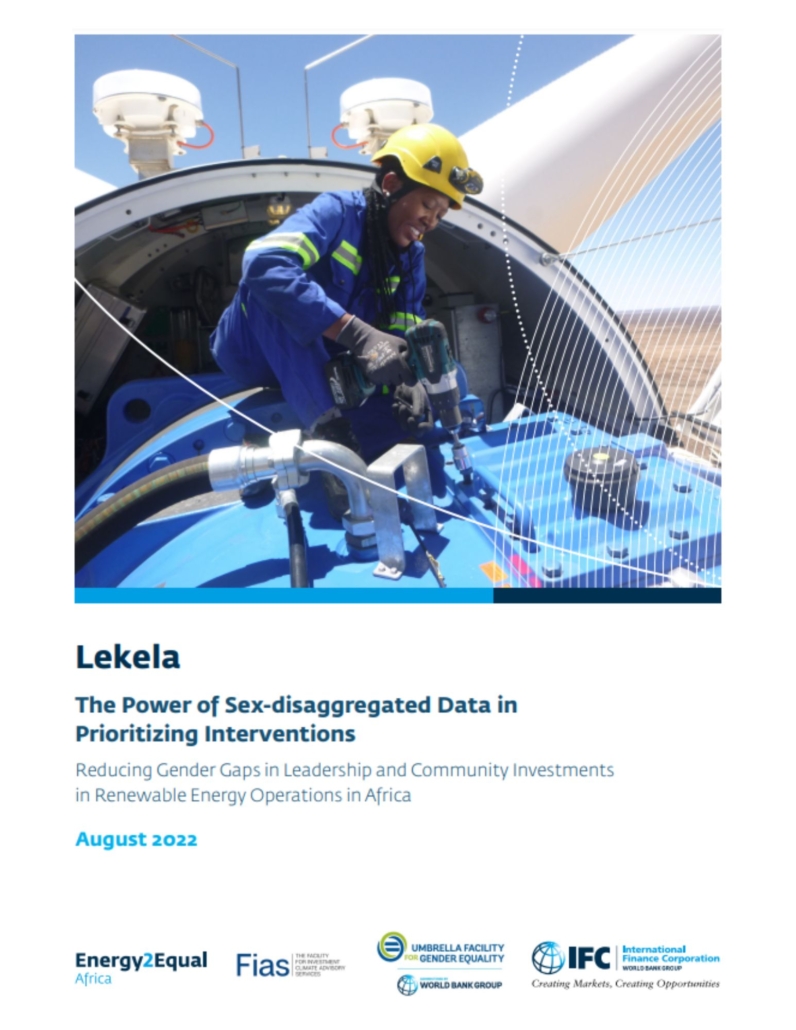
Lekela – The Power of Sex-disaggregated Data in Prioritizing Interventions
This company insights report is part of a series of short studies highlighting successful gender equality approaches taken by companies in the E2E program as they enhance their recruitment, retention, and promotion of women.
Brochure | Sustainability-linked Finance
Sustainability-linked finance (SLF) is a powerful tool for mobilizing capital as the world moves towards a greener global future. SLF incentivizes companies to pursue ambitious, long-term environmental and social goals, and its use can help countries achieve the 2030 UN Sustainable Development Goals.
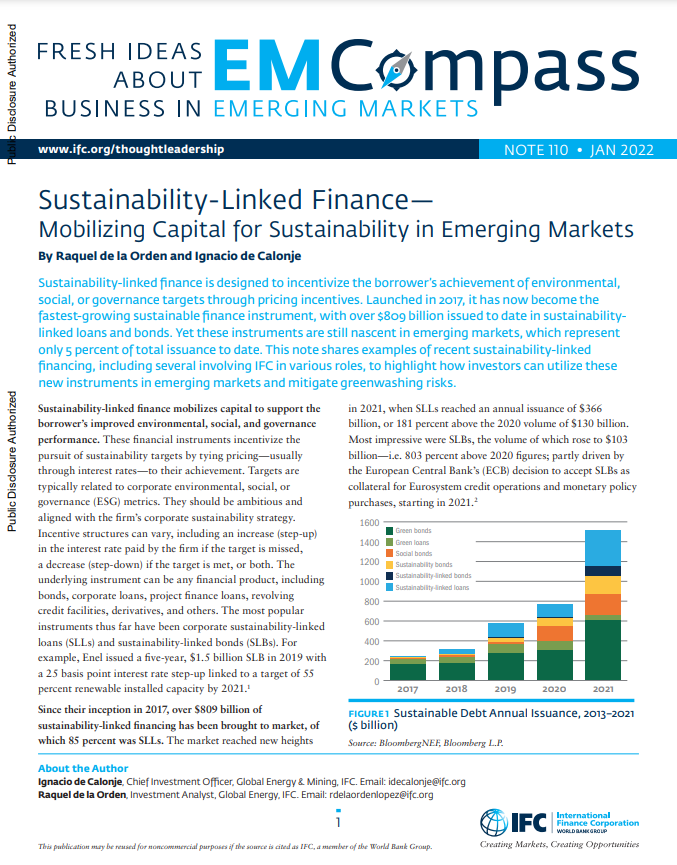
Sustainability-Linked Finance—Mobilizing Capital for Sustainability in Emerging Markets
This note shares examples of recent sustainability-linked financing, including several involving IFC in various roles, to highlight how investors can utilize these new instruments in emerging markets and mitigate greenwashing risks.
Sustainable Bonds: Bridging the Gap for Gender Equality
This guide provides a framework to the market on how sustainable debt instruments can be used to advance gender equality in both the public and private sectors.
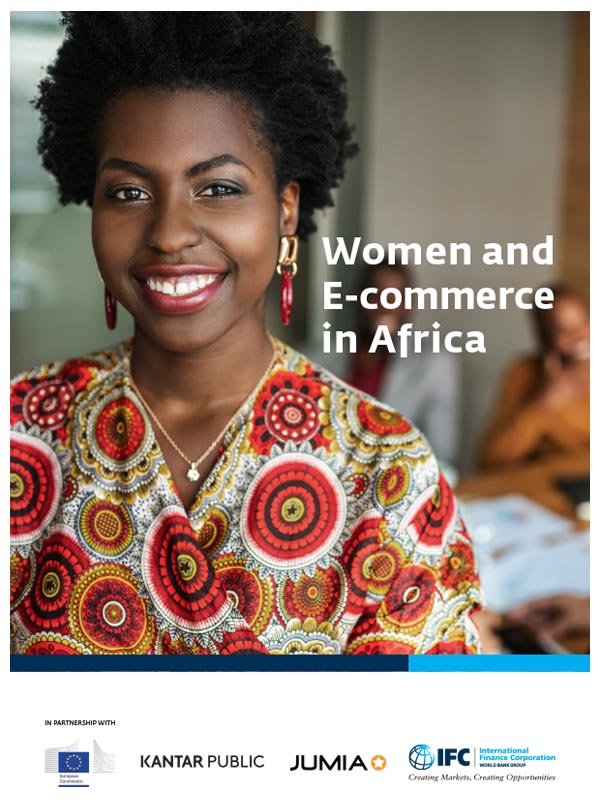
Women and E-commerce in Africa
The rapid digital transformation underway in Africa has the potential to have an equally transformative impact on women entrepreneurs.
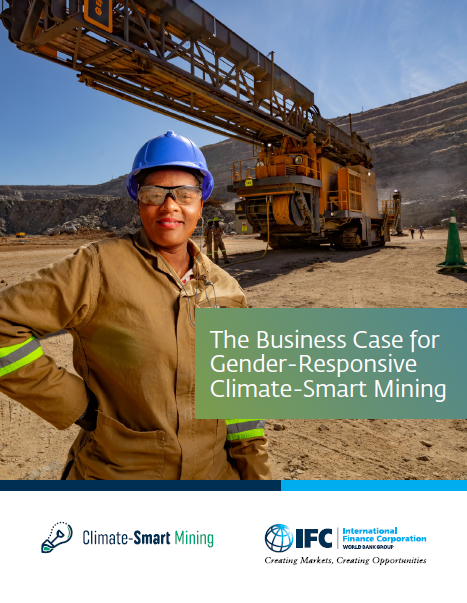
The Business Case for Gender-Responsive Climate-Smart Mining
This document illustrates how gender-responsive climate-smart mining (CSM) strategies are good for business and good for the planet. It outlines entry points for gender considerations within the pillars of the CSM Initiative and enlists recommendations for different stakeholders such as companies, government and civil society to engage.
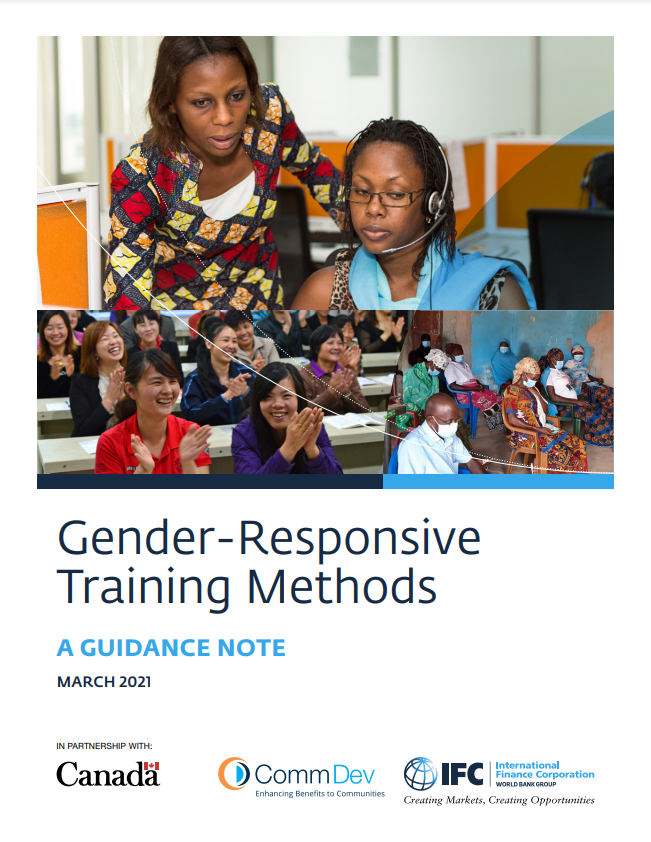
Gender-Responsive Training Methods: A Guidance Note
This Guidance Note highlights how training initiatives can respond to women and men’s different needs and learning preferences. It is intended to strengthen the skills and practice of training providers who run technical business courses for entrepreneurs—whether face to face, or virtually.
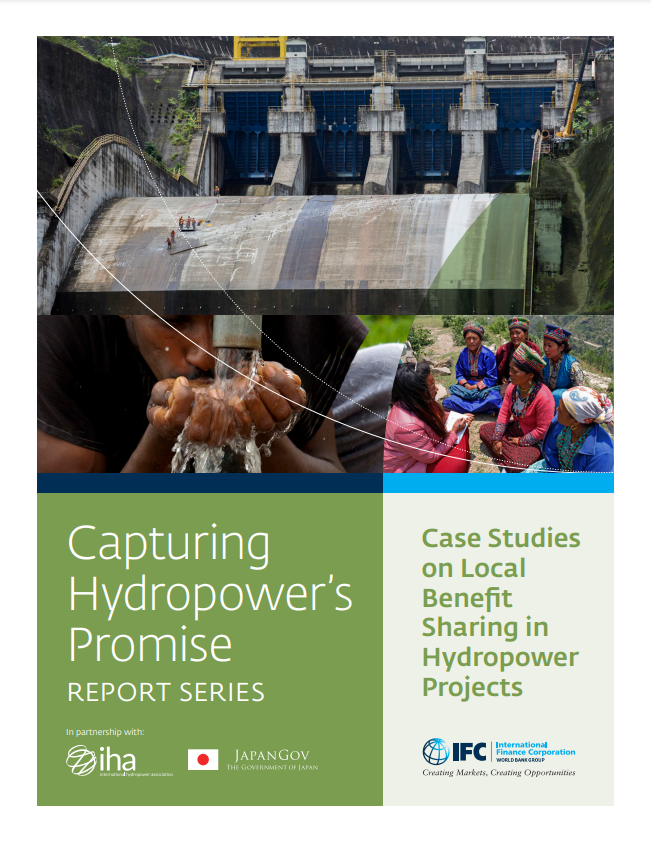
Capturing Hydropower’s Promise: Report Series
The series Capturing Hydropower’s Promise features suggested approaches on implementing local benefit sharing in hydropower projects, along with good practice examples.
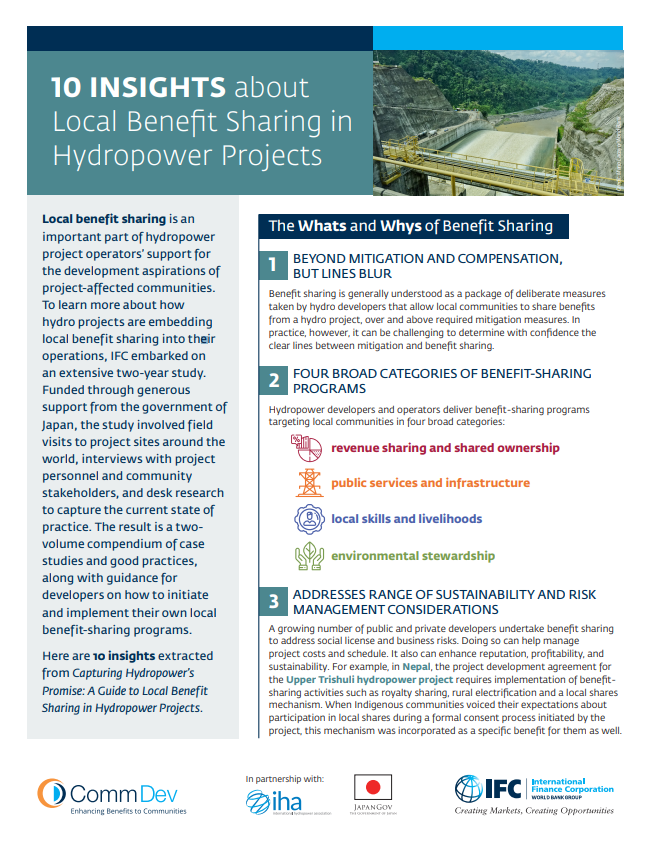
10 Insights about Local Benefit Sharing in Hydropower Projects
This brief highlights 10 insights extracted from the publication Capturing Hydropower’s Promise: A Guide to Local Benefit Sharing in Hydropower Projects.
Private Equity and Value Creation: A Fund Manager’s Guide to Gender-Smart Investing
This guide has been developed to address key questions and gaps in information we have experienced and observed through extensive discussions across the gender smart investing field over the past few years. It is a practical “how to” step by step guide for fund managers on how to strengthen gender diversity within their own firms and incorporate a gender focus into investment operations.
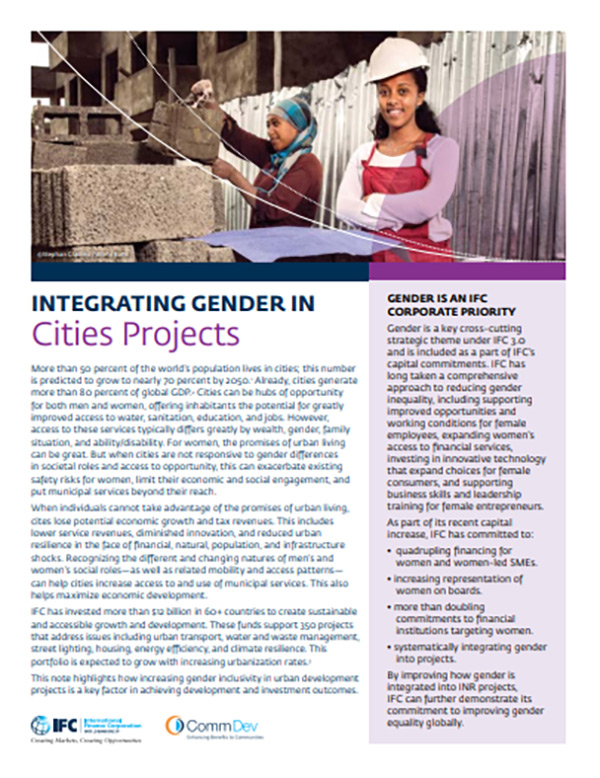
Integrating Gender in Cities Projects
This note highlights how increasing gender inclusivity in urban development projects is a key factor in achieving development and investment outcomes.
Integrating Gender into Water & Sanitation Projects
This brief highlights the benfits of cities involving women in service design, tariff structures, and the water and sanitation workforce
Gender and COVID-19: Key Considerations, Resources and Support for Infrastructure and Natural Resource Companies in Emerging Markets
This note is designed as a quick reference guide to help companies understand how smart, gender-inclusive strategies can bolster the effectiveness of their response to the COVID-19 pandemic.
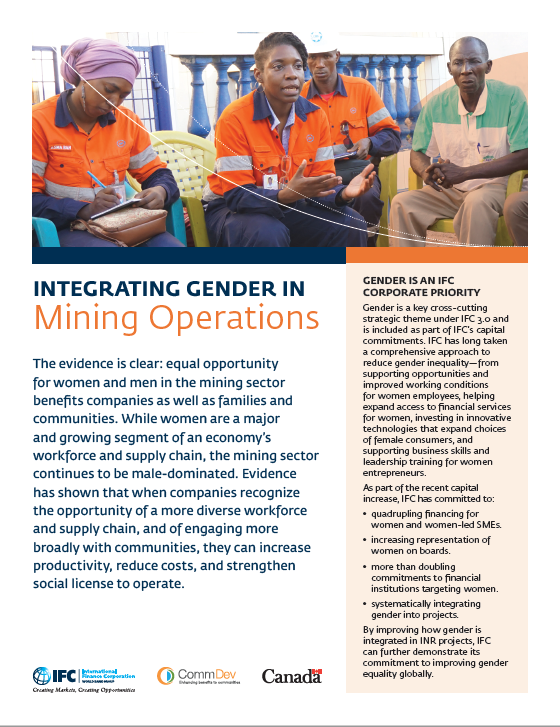
Integrating Gender in Mining Operations
When companies recognize the opportunity of a more diverse workforce and supply chain, and of engaging more broadly with communities, they can increase productivity, reduce costs, and strengthen social license to operate.
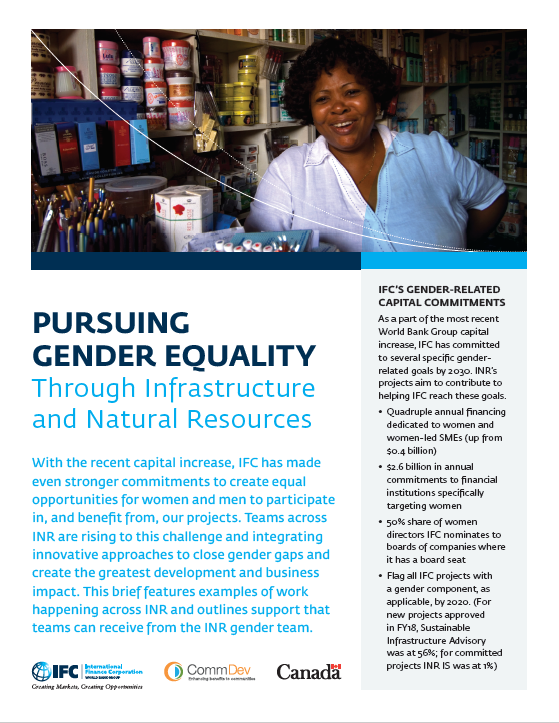
Series: Pursuing Gender Equality Through Infrastructure and Natural Resources
This series of briefs provided tools for infrastructure and natural resources companies to benefit from gender equality.
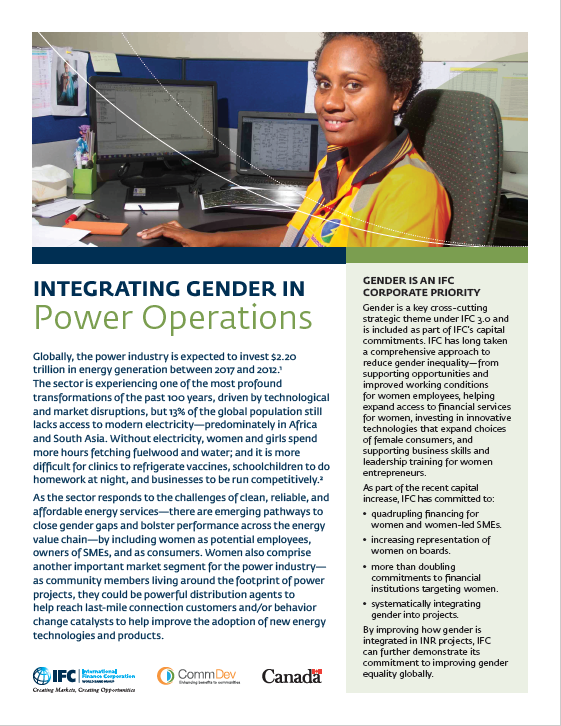
Integrating Gender in Power Operations
As the sector responds to the challenges of clean, reliable, and affordable energy services—there are emerging pathways to close gender gaps and bolster performance across the energy value chain—by including women as potential employees, owners of SMEs, and as consumers.
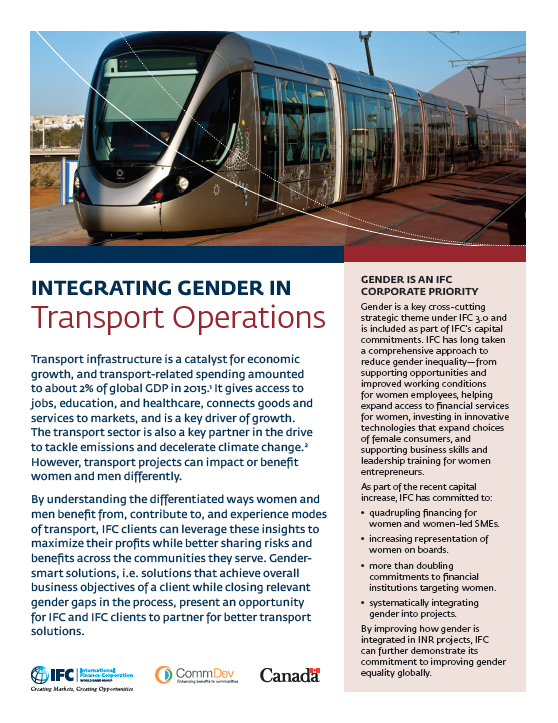
Integrating Gender in Transport Operations
By understanding the differentiated ways women and men benefit from, contribute to, and experience modes of transport, IFC clients can leverage these insights to maximize their profits while better sharing risks and benefits across the communities they serve.
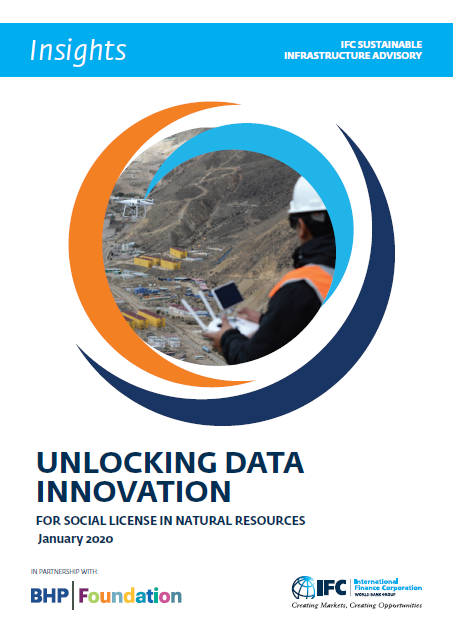
Highlights: Unlocking Data Innovation for Social License in Natural Resources
These are key highlights from the knowledge publication “Unlocking Data Innovation for Social License in Natural Resources” which describes how companies can use new data tools, approaches, and techniques to generate and sustain social license in communities.
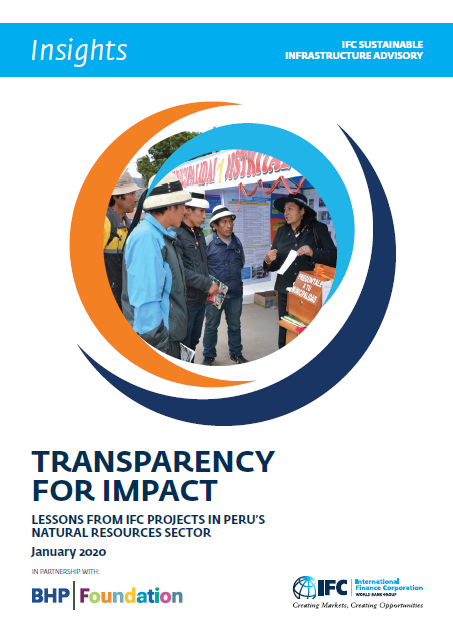
Highlights: Data in Action
These are key highlights from the publication “Data in Action” which consolidates the findings of the natural resources data assessments conducted in: Colombia, Ghana, Mongolia, and Peru by the From Disclosure to Development (D2D) program.
Highlights: Transparency for Impact
These are key highlights from the publication “Transparency for Impact” which intends to help natural resources companies, government agencies, and development practitioners, design and implement transparency-related interventions.
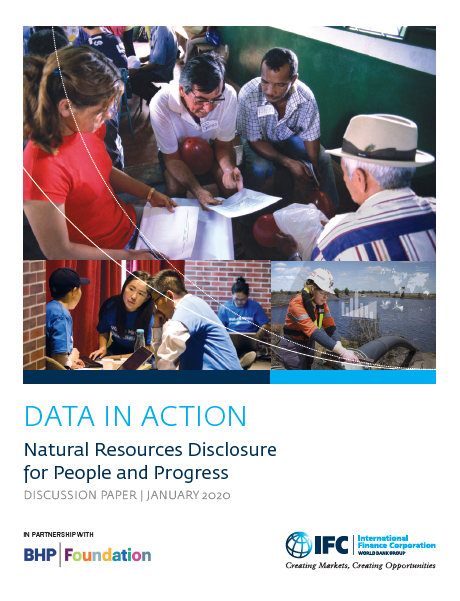
Data in Action: Natural Resources Disclosure for People and Progress
his discussion paper consolidates the findings of D2D’s natural resources data assessments conducted in: Colombia, Ghana, Mongolia, and Peru. It describes key challenges and makes recommendations to industry, governments, and civil society that help bridge the existing data gaps and unlock data-enabled opportunities in the natural resources sector.
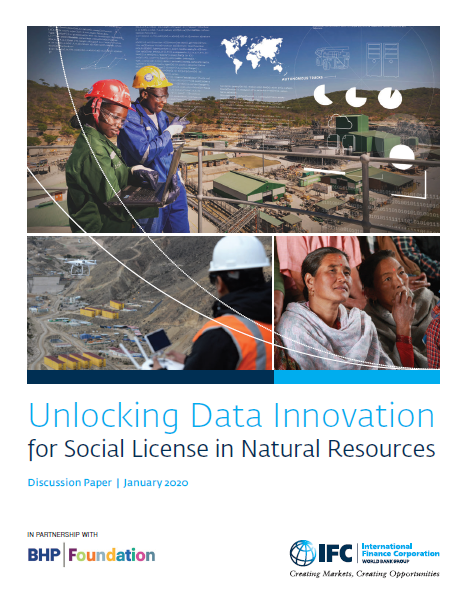
Unlocking Data Innovation for Social License in Natural Resources
This report describes how companies can use new data tools, approaches, and techniques to generate and sustain social license in communities.
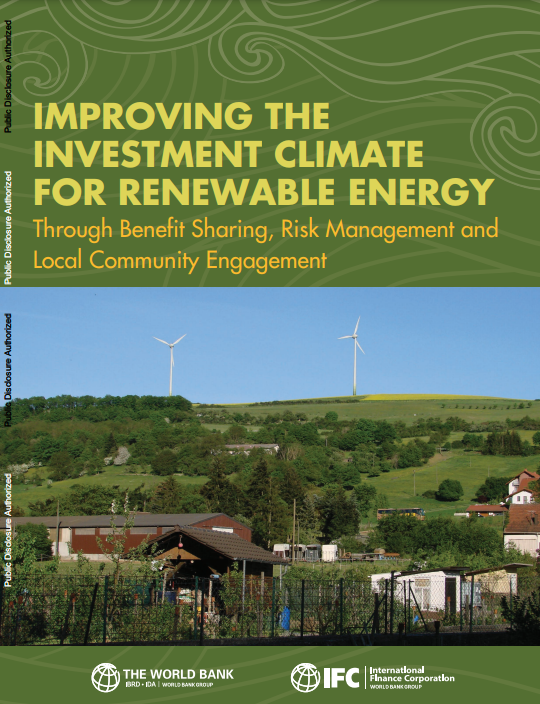
Improving the Investment Climate for Renewable Energy: Through Benefit Sharing, Risk Management, and Local Community Engagement
The study provides recommendations on how to improve the investment climate for renewable energy and wind energy, in particular, through benefit sharing, risk management, and local community engagement.
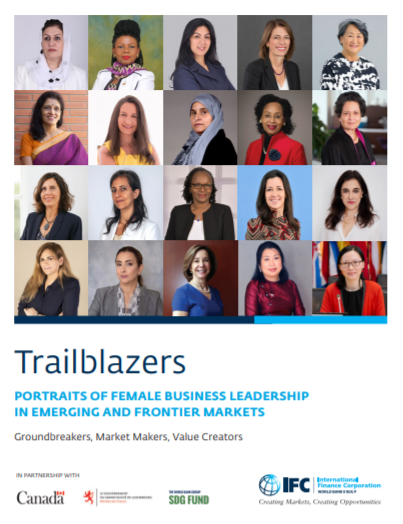
Trailblazers – Portraits of Female Business Leadership in Emerging and Frontier Markets
Part of IFC’s Women on Boards and in Business Leadership Program, the publication features the inspirational personal stories of 20 female business leaders and their advice to other female professionals aspiring to top positions. It highlights the positive impact of their leadership on private sector development in emerging and frontier markets. It also provides key […]
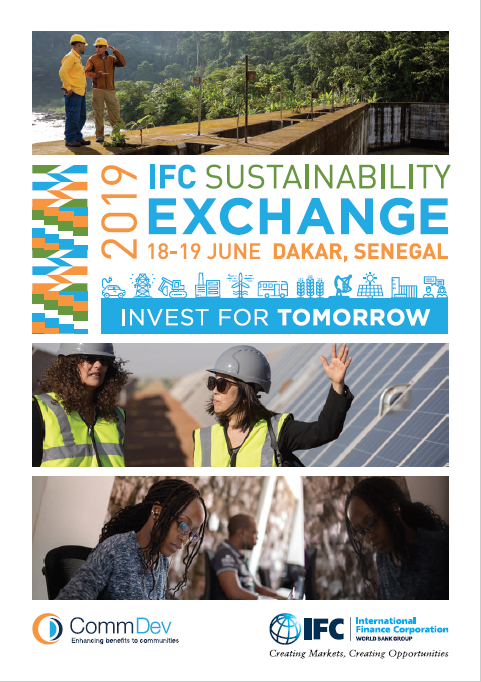
Sustainability Exchange 2019 Conference Program Booklet
IFC’s flagship Sustainability Exchange was held in Dakar June 18-19 to explore how to drive innovation through inclusion. The Exchange convened game changers in infrastructure, natural resources, science, and the arts to challenge assumptions and build a pipeline of sustainable investments across Africa and the globe.

Allin Kausay! 9 Key Ideas to Live Without Violence
This guide aims to help local agricultural leaders (“Yachachiq”) address domestic and gender-based violence and promote healthier gender relationships using public channels and resources available to guide women and families.
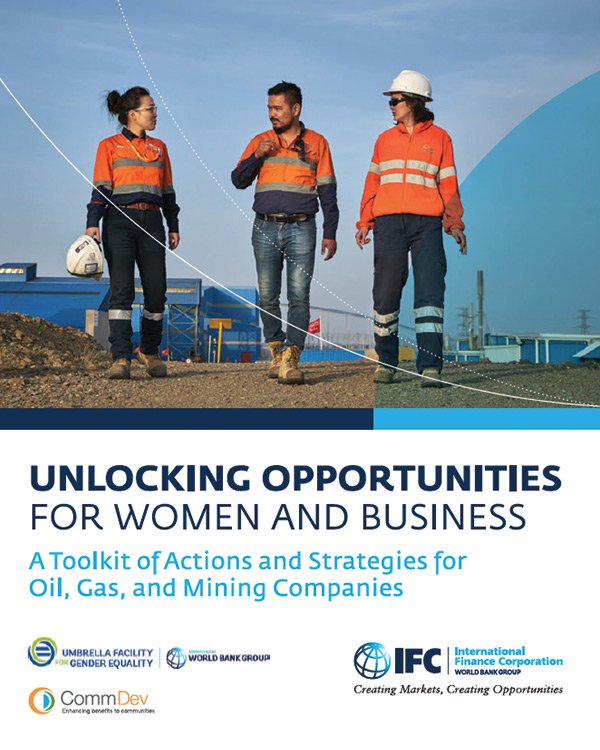
Unlocking Opportunities for Women and Business: A Toolkit of Actions and Strategies for Oil, Gas, and Mining Companies
A growing number of oil, gas, and mining companies have committed to create more diverse, gender-balanced, inclusive industries – recognizing that it is not only the right thing to do, but it also makes business sense.
Global Youth Wellbeing Index 2017
To offer a comprehensive view of successes and gaps for youth worldwide, the 2017 Global Youth Wellbeing Index includes 29 countries and covers seven domains: gender equality, economic opportunity, education, health, citizen participation, safety and security, and information and communication technology.
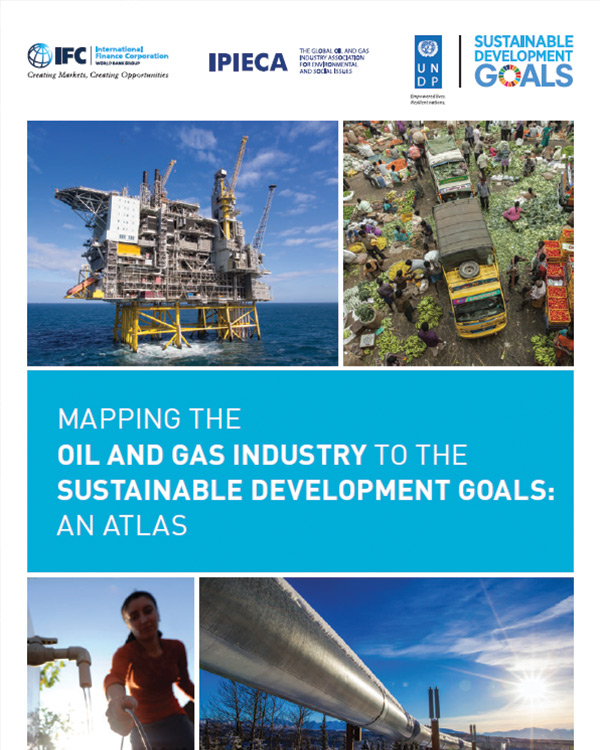
Mapping the Oil and Gas Industry to the Sustainable Development Goals: An Atlas
Achieving the SDGs by the target of 2030 will require unprecedented cooperation and collaboration among governments, non-governmental organizations, development partners, the private sector and communities.
[Draft for Public Comment] Mapping the Oil and Gas Industry to the Sustainable Development Goals: An Atlas
Together with the United Nations Development Programme (UNDP) and IPIECA (the global oil and gas industry association for environmental and social issues), IFC has released for public review and commenting a draft report on how the oil and gas industry contributes to the Sustainable Development Goals (SDGs).
Effects of Oil, Gas and Mining Investments on Jobs
It is widely recognized that growth and jobs help lift people out of poverty.
Mapping Mining to the Sustainable Development Goals: An Atlas
This Atlas maps the relationship between mining and the Sustainable Development Goals (SDGs) by using examples of good practice in the industry and existing knowledge and resources in sustainable development that if replicated or scaled up could make useful contributions to the SDGs.
Social Accountability in Pictures
The document shows in a visual manner IFC’s experience promoting social accountability at the local level in Peru’s extractive regions through the implementation of the MIM (Improving Municipal Investment) Peru project.
Mapping Mining to the Sustainable Development Goals: A Preliminary Atlas
The draft report is a collection of maps to help mining companies navigate where their products and activities – from exploration, through mining itself, to end products and eventually mine closure – can help the world achieve the SDGs.
Social Impact Assessment: Guidance for Assessing and Managing the Social Impacts of Projects
The purpose of this Guidance Note is to provide advice to various stakeholders about what is expected in good practice social impact assessment (SIA) and social impact management processes, especially in relation to project development.
SUSTAIN: Cutting-edge business solutions magazine in Extractive Industries
SUSTAIN magazine presents cutting-edge business solutions for achieving stronger performance while addressing sustainability challenges.
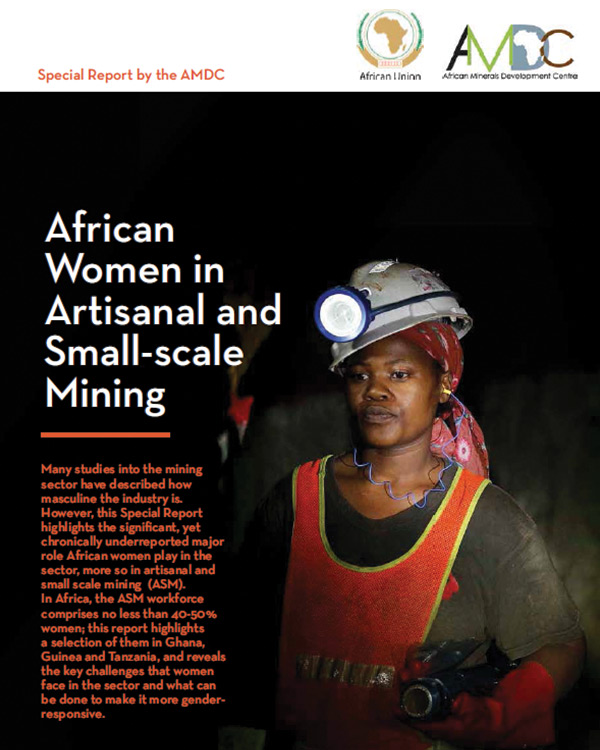
African Woman in Artisanal and Small Scale Mining
Many studies into the mining sector have described how masculine the industry is.
A Strategic Approach to Early Stakeholder Engagement
The handbook takes the reader step-by-step through the process of building trust relationships and gaining and maintaining a social license to operate at each project lifecycle stage.
SUSTAIN: Cutting-edge business solutions magazine in Agribusiness
How can companies across the world achieve stronger performance while addressing sustainability challenges? How can they learn from each other?
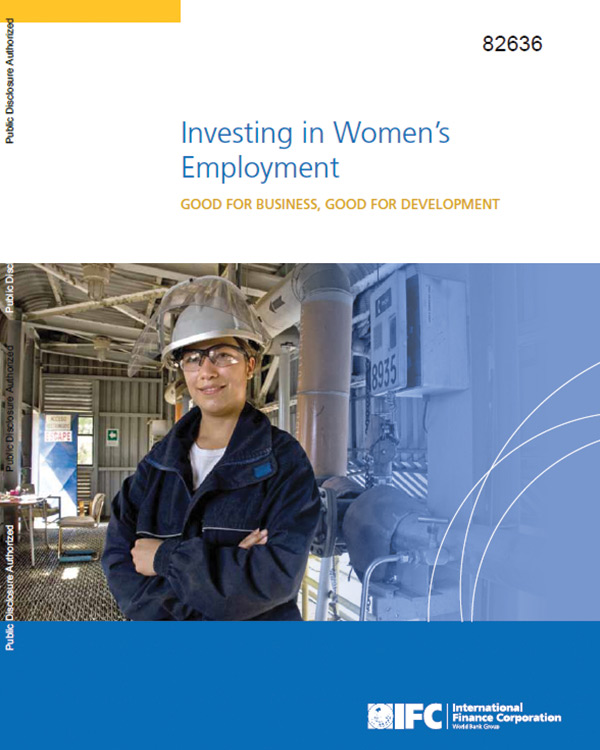
Investing in Women’s Employment
Economic growth is more robust and sustainable when women and men alike participate fully in the labor market.
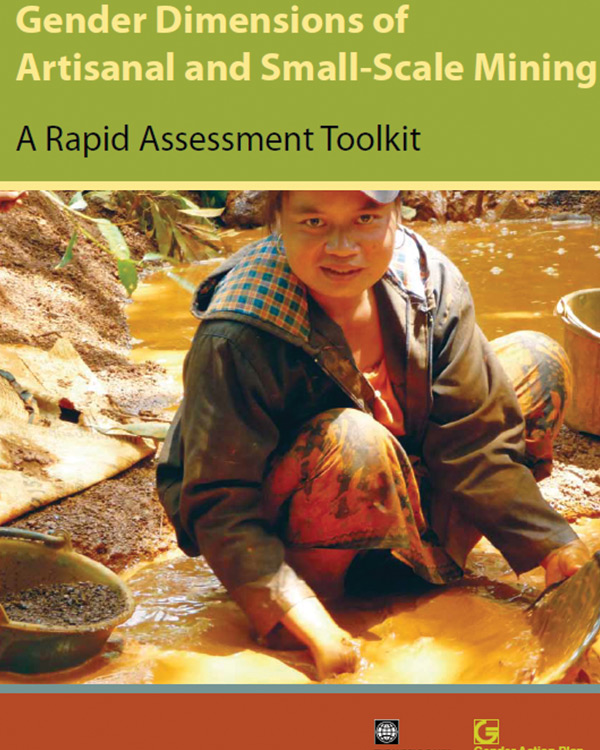
Gender Dimensions of Artisanal and Small-Scale Mining A Rapid Assessment Toolkit
This is intended as an easy-to-use toolkit for understanding men’s and women’s differentiated access to the resources and opportunities associated with artisanal and small-scale mining (ASM) and how they are affected by ASM.
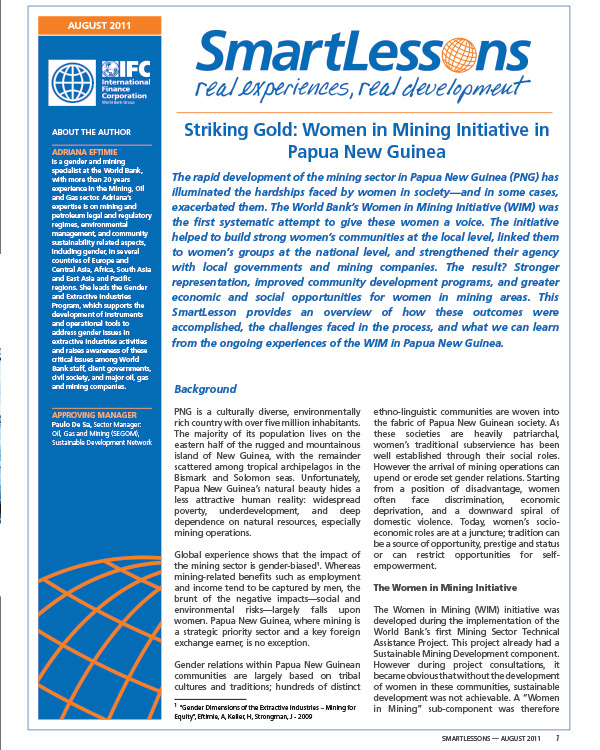
Striking Gold: Women in Mining Initiative in Papua New Guinea
The rapid development of the mining sector in Papua New Guinea (PNG) has illuminated the hardships faced by women in society, and in some cases, exacerbated them.

Forests and Gender
The primary objective of IUCN’s publication entitled “Forest and Gender” is to emphasize the importance of integrating gender equality principles in forest conservation and sustainability.
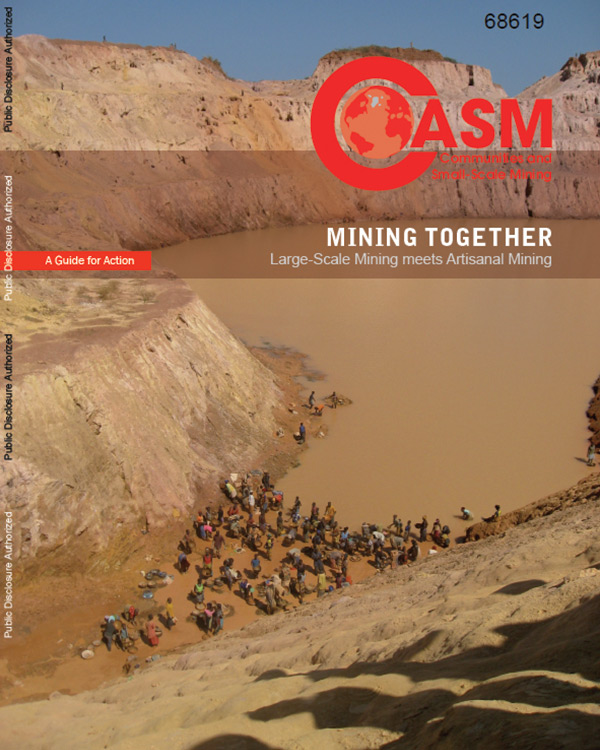
Mining Together: Large-Scale Mining meets Artisanal Mining
This guide, then, represents a step in the right direction to start transforming the relationship between large-scale and artisanal miners through win-win solutions that emerge out of the genuine interaction and dialogue of all stakeholders involved: governments, companies, communities, miners and development organizations.
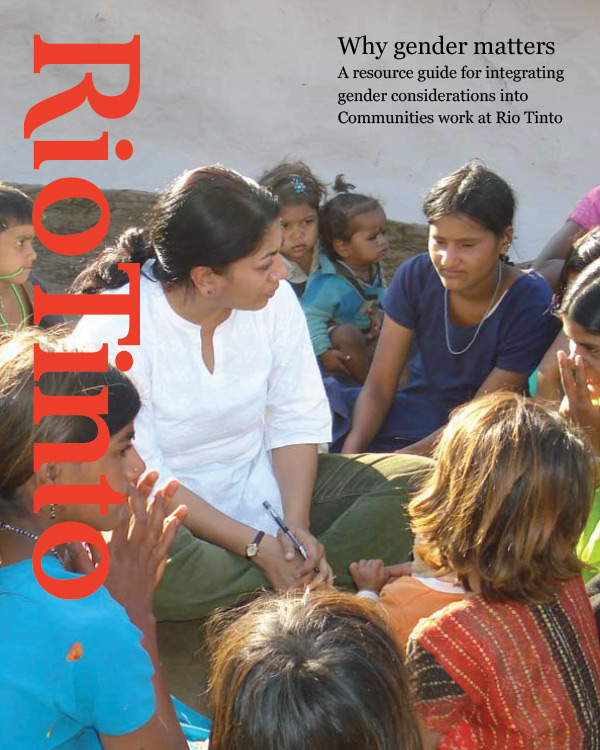
Why Gender Matters
This resource guide offers practical methodologies, frameworks and case studies for integrating gender considerations into communities and development work.
