
Local Government and Development
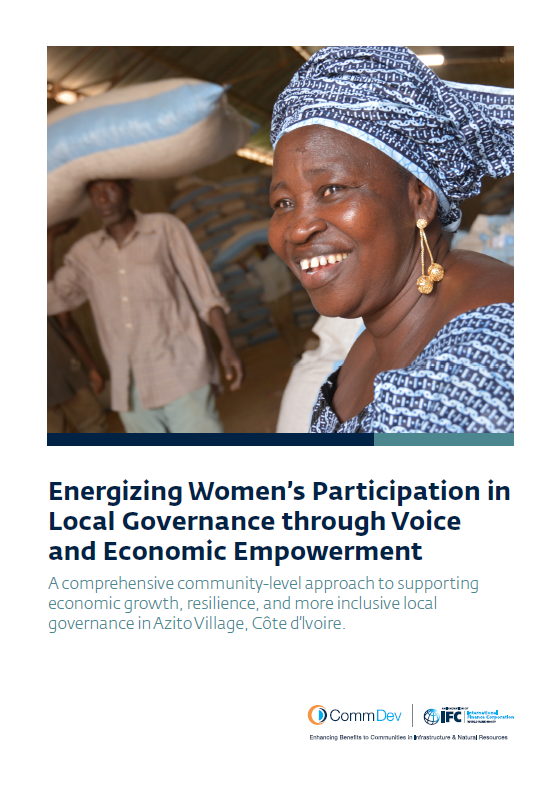
Azito: Energizing Women’s Participation in Local Governance through Voice and Economic Empowerment
The case study “Energizing Women’s Participation in Local Governance through Voice and Economic Empowerment” highlights a collaborative initiative between Azito Energie and the IFC in Azito Village, Côte d’Ivoire. The project aimed to foster inclusive governance and socio-economic growth by empowering women and youth. Historically excluded from decision-making, these groups received training in financial literacy, […]
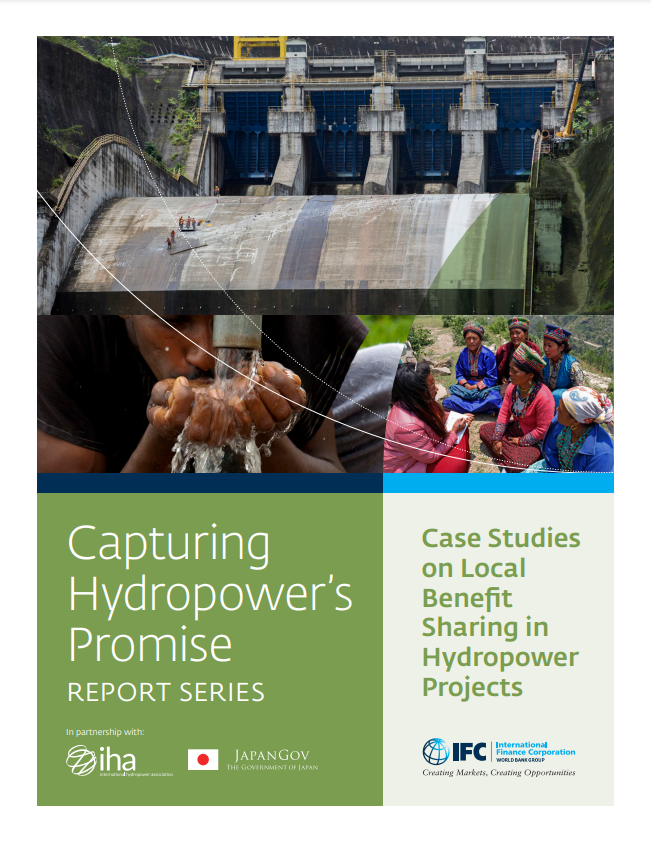
Capturing Hydropower’s Promise: Report Series
The series Capturing Hydropower’s Promise features suggested approaches on implementing local benefit sharing in hydropower projects, along with good practice examples.
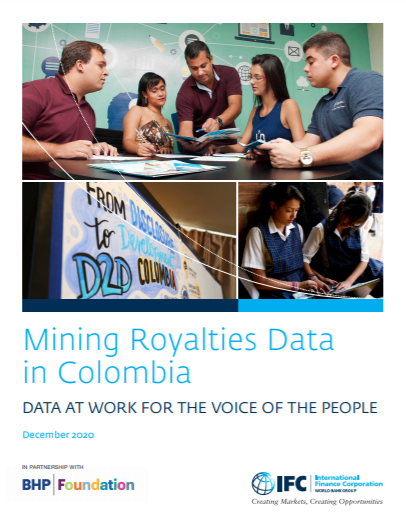
Mining Royalties Data in Colombia: Data at Work for the Voice of the People
In this report, IFC presents a set of recommendations for governments, industry and civil society aimed at improving data disclosure and use practices of mining royalty data to provide citizens with complete, relevant and actionable information. En el informe de D2D Datos de Regalías Mineras en Colombia: Datos en beneficio de los ciudadanos, IFC presenta […]
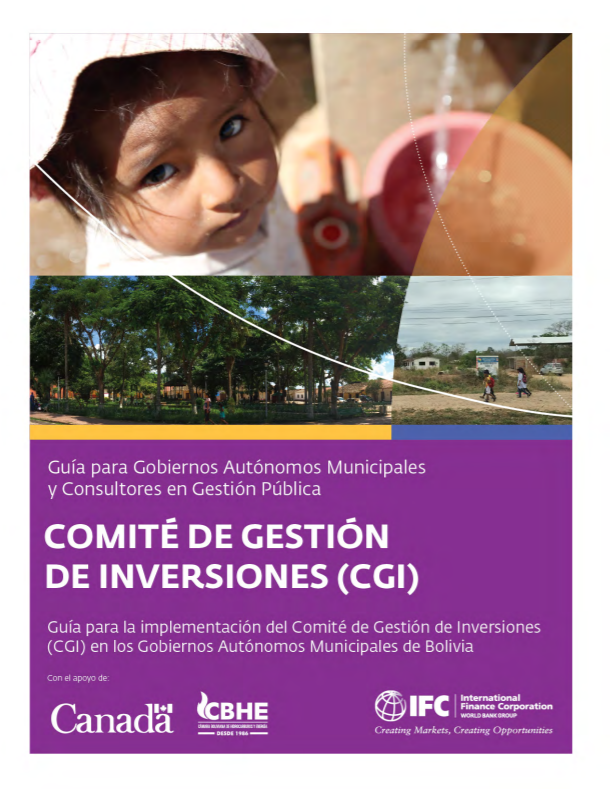
Guidance for Bolivia’s Municipalities on Investing Natural Resource Royalties
Royalties paid by natural resources companies active in Bolivia are intended to support local community development. But often local communities that are impacted by projects do not receive critical benefits to improve their living conditions, such as access to basic services and infrastructure. This can create a difficult operating environment, with host communities looking to […]
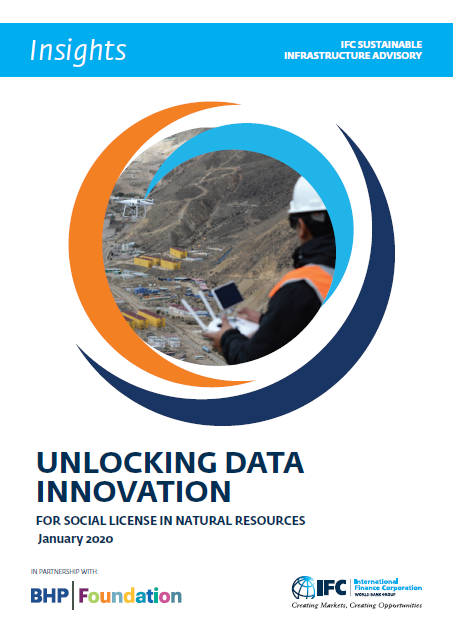
Highlights: Unlocking Data Innovation for Social License in Natural Resources
These are key highlights from the knowledge publication “Unlocking Data Innovation for Social License in Natural Resources” which describes how companies can use new data tools, approaches, and techniques to generate and sustain social license in communities.
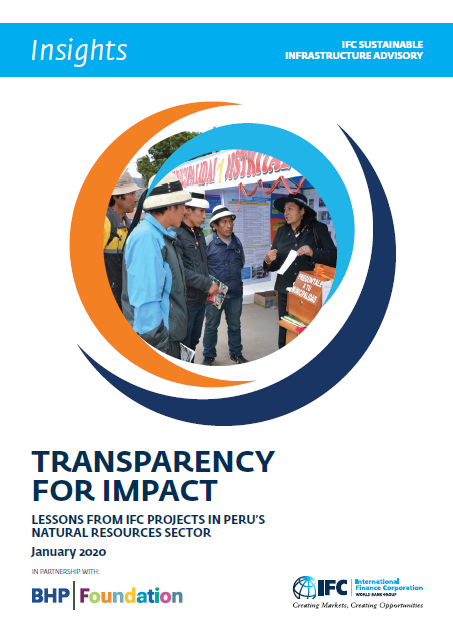
Highlights: Transparency for Impact
These are key highlights from the publication “Transparency for Impact” which intends to help natural resources companies, government agencies, and development practitioners, design and implement transparency-related interventions.
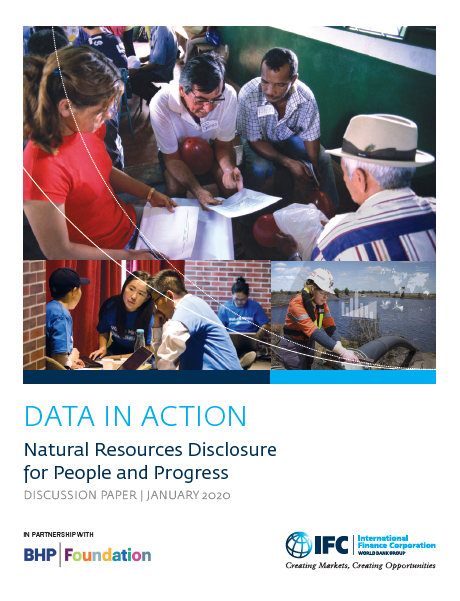
Data in Action: Natural Resources Disclosure for People and Progress
his discussion paper consolidates the findings of D2D’s natural resources data assessments conducted in: Colombia, Ghana, Mongolia, and Peru. It describes key challenges and makes recommendations to industry, governments, and civil society that help bridge the existing data gaps and unlock data-enabled opportunities in the natural resources sector.
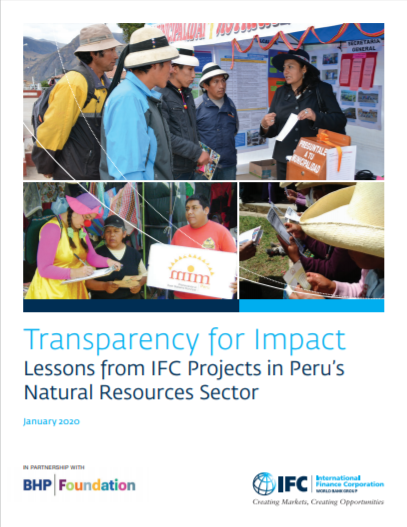
Transparency for Impact: Lessons from IFC Projects in Peru’s Natural Resources Sector
This document is part of a series of knowledge products by IFC’s From Disclosure to Development program. Two other publications in the series are Unlocking Data Innovation for Social License in Natural Resources and Natural Resource Data: Challenges and Opportunities.
Estimating the Effects of the Development of the Oil and Gas Sector on Growth and Jobs in Ghana (2015-30): A Modelling and Value Chain Analysis
Recent oil and gas discoveries in Ghana present a unique opportunity to boost economic growth and increase the prosperity of its people.
Ayninakuy in Pictures
Through pictures, this publication illustrates the results of IFC’s Ayninakuy project and how it impacted local families, as well as the outcomes of public-private partnerships to enhance farmers’ livelihoods in the mining region of Apurimac, Peru.
Municipal Good Governance Guides
IFC has compiled in a series of guides its experience and learnings promoting good governance best practices among local governments in Peru to provide municipal officers with the basic tools for improving investment management, transparency mechanisms, and citizen participation.
Mapping the Oil and Gas Industry to the Sustainable Development Goals: An Atlas
Achieving the SDGs by the target of 2030 will require unprecedented cooperation and collaboration among governments, non-governmental organizations, development partners, the private sector and communities.
Political Settlements and the Governance of Extractive Industry: A Comparative Analysis of the longue durée in Africa and Latin America
This paper synthesises findings from research in Bolivia, Ghana, Peru and Zambia to address the following three questions
Mapping Mining to the Sustainable Development Goals: An Atlas
This Atlas maps the relationship between mining and the Sustainable Development Goals (SDGs) by using examples of good practice in the industry and existing knowledge and resources in sustainable development that if replicated or scaled up could make useful contributions to the SDGs.
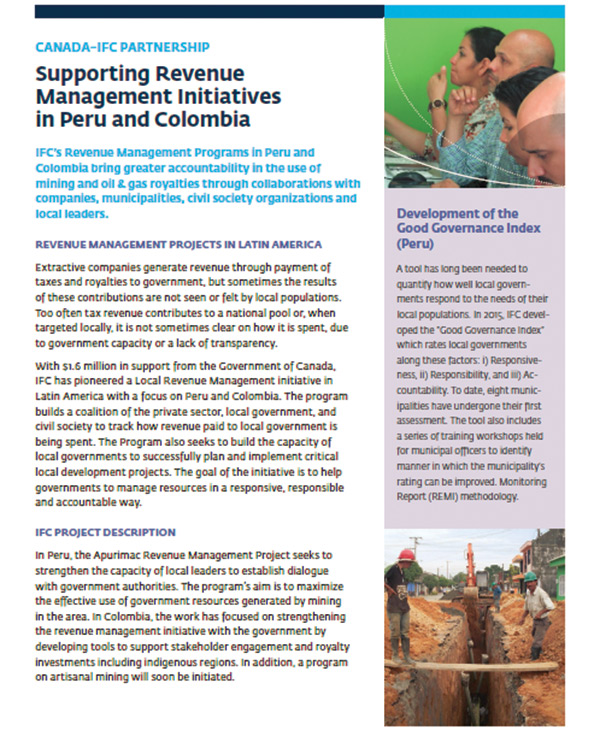
Supporting Revenue Management Initiatives in Peru and Colombia
IFC’s Revenue Management Programs in Peru and Colombia bring greater accountability in the use of mining and oil & gas royalties through collaborations with companies, municipalities, civil society organizations and local leaders.
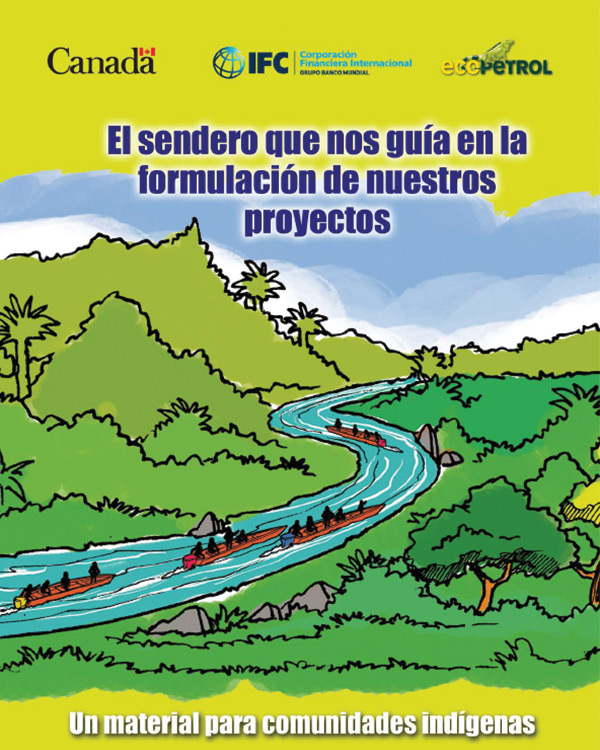
Preparing Public Investment Projects – A Guide for Indigenous Communities in Colombia
This guide about preparing public investment projects is addressed to indigenous communities in Colombia, to raise awareness about royalties from Extractive Industries, the rights they have to have access to these resources, as well as explaining the process to create investment proposals to tackle their needs with the support from local governments.
Social Accountability in Pictures
The document shows in a visual manner IFC’s experience promoting social accountability at the local level in Peru’s extractive regions through the implementation of the MIM (Improving Municipal Investment) Peru project.
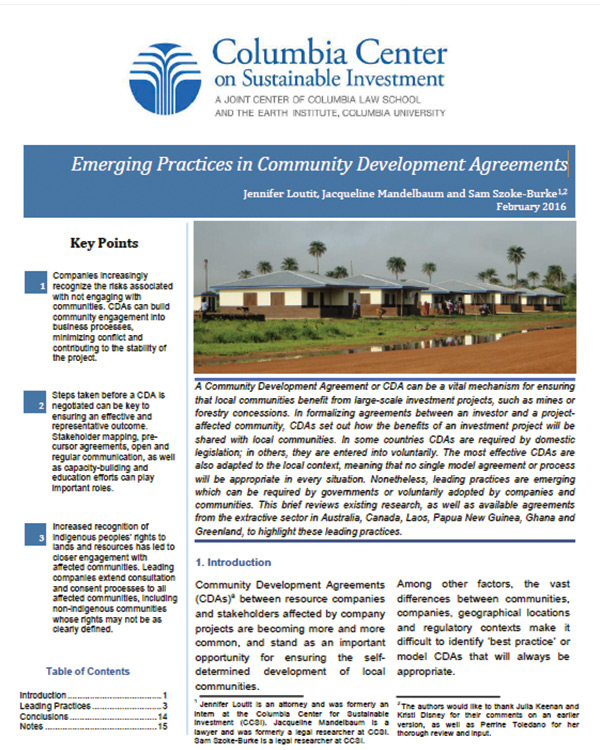
Emerging Practices in Community Development Agreements
A Community Development Agreement or CDA can be a vital mechanism for ensuring that local communities benefit from large-scale investment projects, such as mines or forestry concessions.
Mapping Mining to the Sustainable Development Goals: A Preliminary Atlas
The draft report is a collection of maps to help mining companies navigate where their products and activities – from exploration, through mining itself, to end products and eventually mine closure – can help the world achieve the SDGs.
USEITI 2015 Executive Summary
As part of fulfilling the international EITI (Extractive Industries Transparency Initiative) Standard, the Independent Administrator worked with the Multi-Stakeholder Group to develop an Executive Summary of the USEITI 2015 Report.
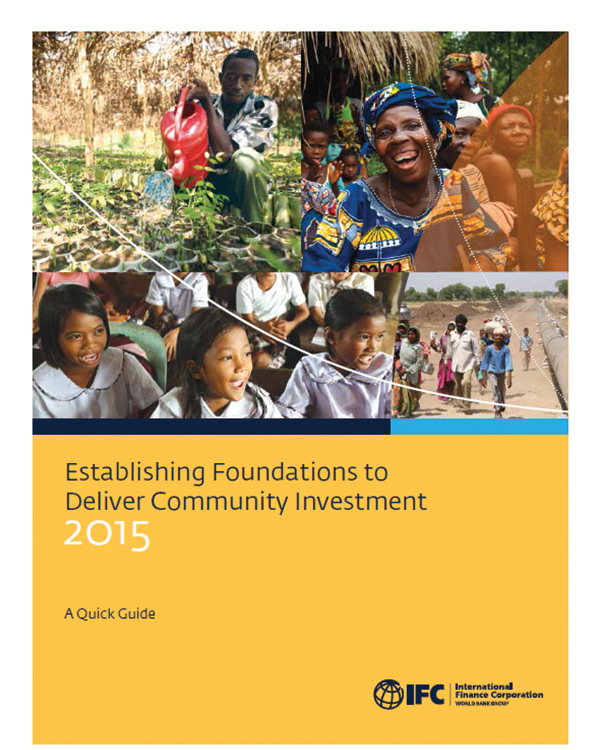
Establishing Foundations to Deliver Community Investment
Providing benefits to communities affected by a project can help a company to obtain and maintain a “social license to operate,” and manage project risks and stakeholder expectations.
Partnering for Impact: Supporting Systemic Change to Deliver the Sustainable Development Goals in Africa
Richard Gilbert, Deputy Director of Business Action for Africa and Beth Jenkins, Insights Director at Business Fights Poverty and Non-Resident Fellow of the Business Action for Africa published the first report in this series in 2009, focusing broadly on the role of business and development.
SUSTAIN: Cutting-edge business solutions magazine in Agribusiness
How can companies across the world achieve stronger performance while addressing sustainability challenges? How can they learn from each other?
