
Stakeholder Engagement
ESG Data Stewardship: An IFC Good Practice Note for Mining
Responsible mining companies benefit from organized, integrated environmental, social, and governance (ESG) data collection and disclosure. While traditional data management and governance focuses on compliance and operational efficiency, data stewardship goes a step further by incorporating public benefit, and creating value for companies, investors, and communities.
Adaptation KPIs in Infrastructure’s Sustainability-Linked Finance
This discussion paper offers insights on developing and implementing adaptation KPIs for sustainability-linked finance transactions for infrastructure. It is aimed at market practitioners—infrastructure owners and operators as well as investors—that are navigating the intersection of resilience and sustainable finance.
Building Climate Resilience in the Mining Sector
This note offers guidance to mining companies on strengthening climate resilience both inside and outside the mine fence, guided by the best available scientific literature and tools.
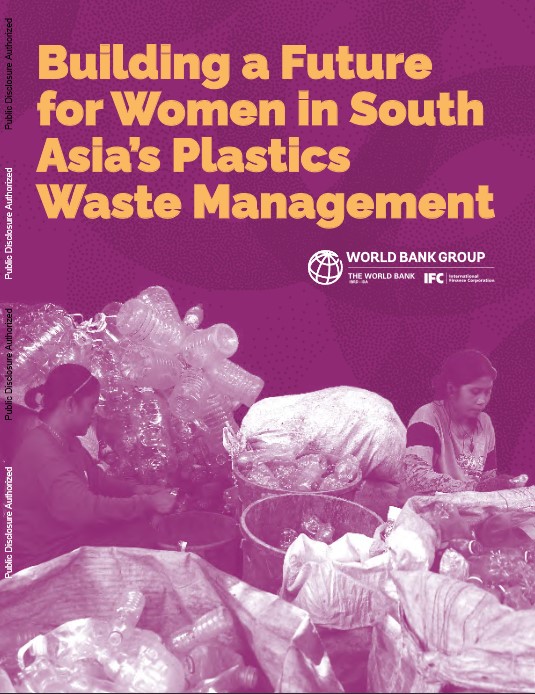
Building a Future for Women in South Asia’s Plastics Waste Management
This report examines the role of women in South Asia’s plastic waste management systems and the challenges they face, and provides recommendations for collaborative action to improve and safeguard women’s livelihoods in the sector.
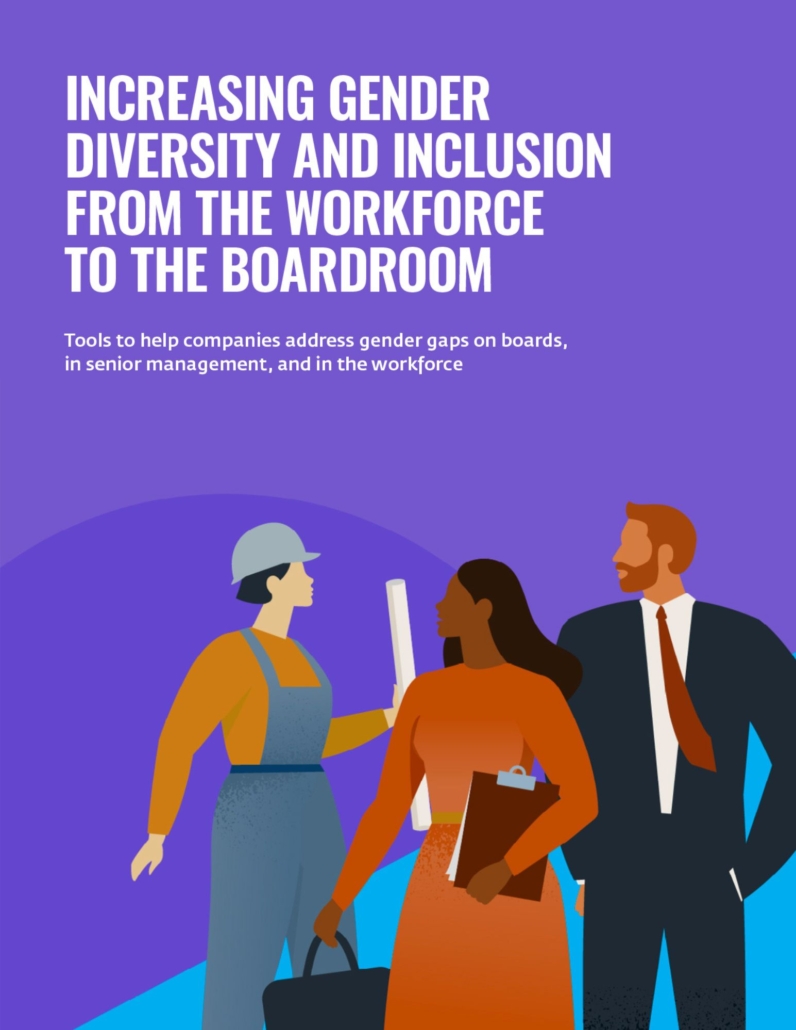
IFC Gender and Infrastructure Toolkit
A comprehensive suite of resources to empower companies to address gender inequality in the workforce, supply chain, and community activities.✅ Tool Suites: Practical tools and guidance on project planning, recruitment and more ✅ Business Cases: Insights from companies who’ve implement gender-smart practices ✅ Interactive Toolkit Builder: Create a customized action-plan for your company
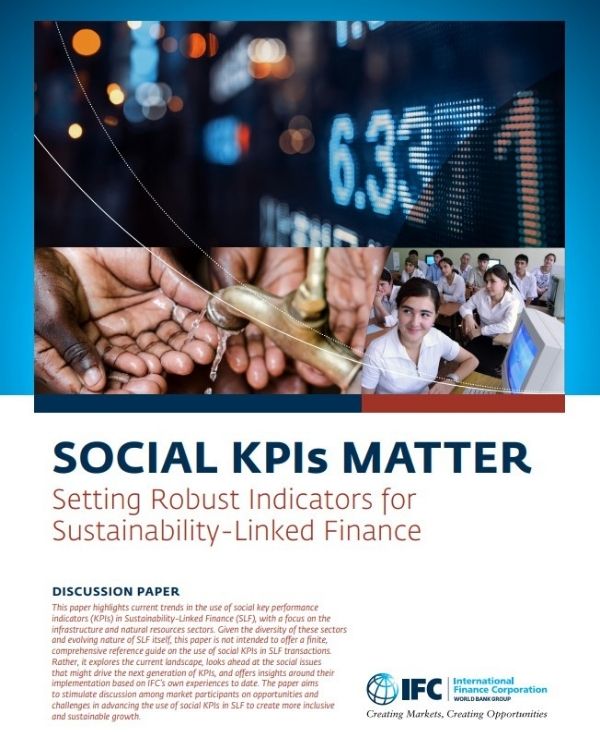
Social KPIs Matter: Setting Robust Indicators for Sustainability-Linked Finance (Updated)
This draft paper highlights current trends in the use of social key performance indicators (KPIs) in Sustainability-Linked Finance, with a focus on the infrastructure sector.
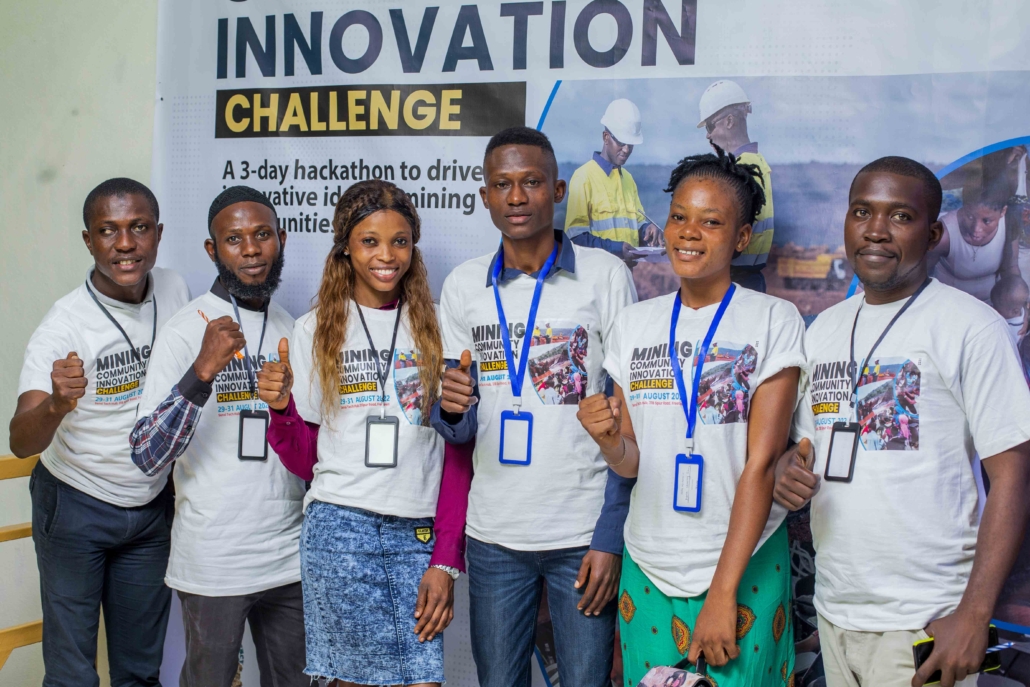
Factsheet | Disclosure to Development ‘D2D’ Sierra Leone Project
IFC’s ‘From Disclosure to Development’ (D2D) Project in Sierra Leone strengthens the digital entrepreneurship ecosystem, with a focus on sustainably supporting mining communities.
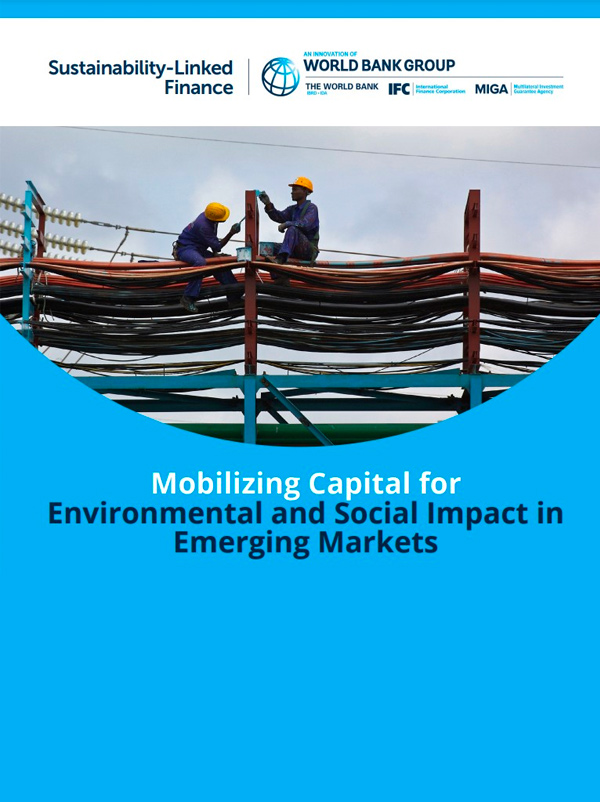
Brochure | Sustainability-linked Finance
Sustainability-linked finance (SLF) is a powerful tool for mobilizing capital as the world moves towards a greener global future. SLF incentivizes companies to pursue ambitious, long-term environmental and social goals, and its use can help countries achieve the 2030 UN Sustainable Development Goals.
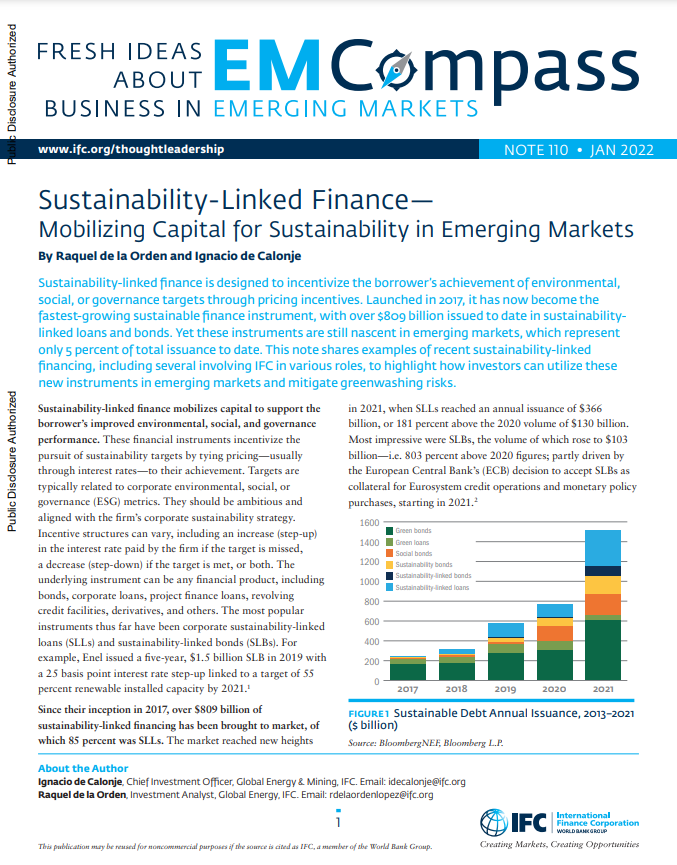
Sustainability-Linked Finance—Mobilizing Capital for Sustainability in Emerging Markets
This note shares examples of recent sustainability-linked financing, including several involving IFC in various roles, to highlight how investors can utilize these new instruments in emerging markets and mitigate greenwashing risks.
Sustainable Bonds: Bridging the Gap for Gender Equality
This guide provides a framework to the market on how sustainable debt instruments can be used to advance gender equality in both the public and private sectors.
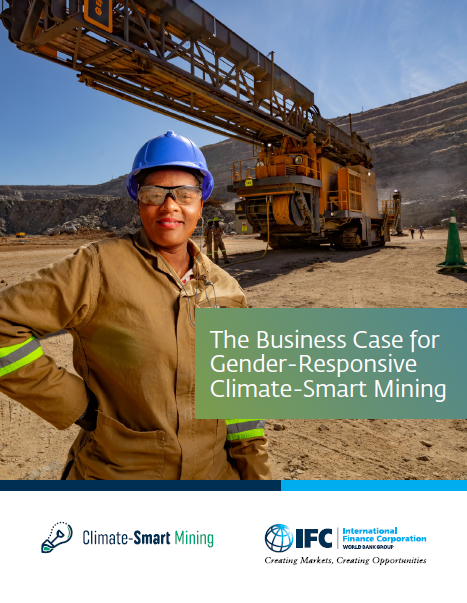
The Business Case for Gender-Responsive Climate-Smart Mining
This document illustrates how gender-responsive climate-smart mining (CSM) strategies are good for business and good for the planet. It outlines entry points for gender considerations within the pillars of the CSM Initiative and enlists recommendations for different stakeholders such as companies, government and civil society to engage.
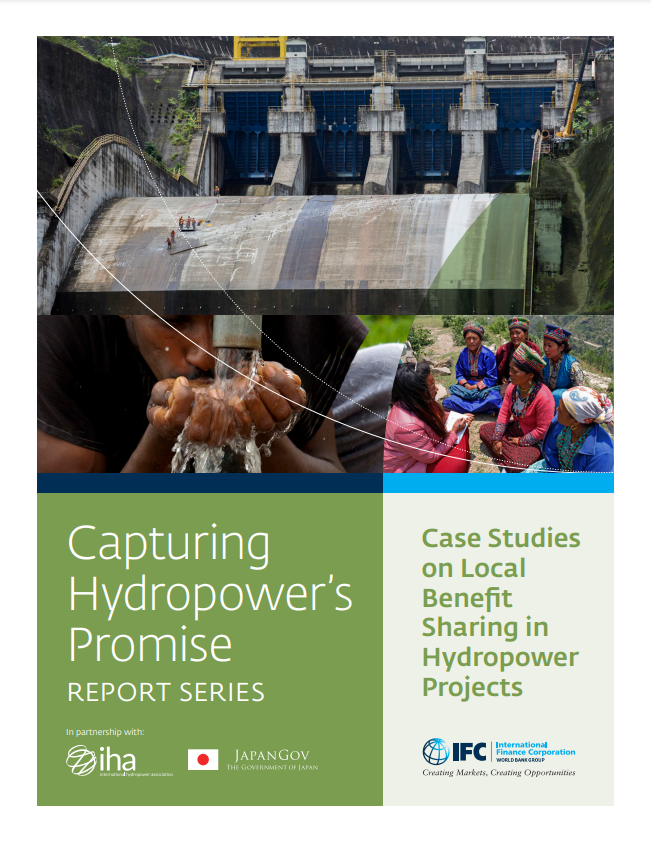
Capturing Hydropower’s Promise: Report Series
The series Capturing Hydropower’s Promise features suggested approaches on implementing local benefit sharing in hydropower projects, along with good practice examples.
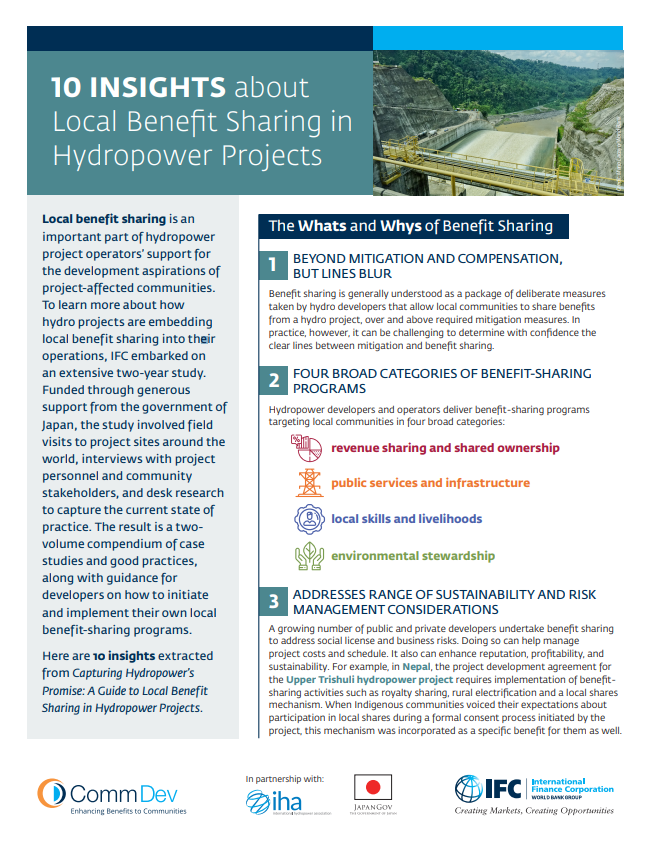
10 Insights about Local Benefit Sharing in Hydropower Projects
This brief highlights 10 insights extracted from the publication Capturing Hydropower’s Promise: A Guide to Local Benefit Sharing in Hydropower Projects.
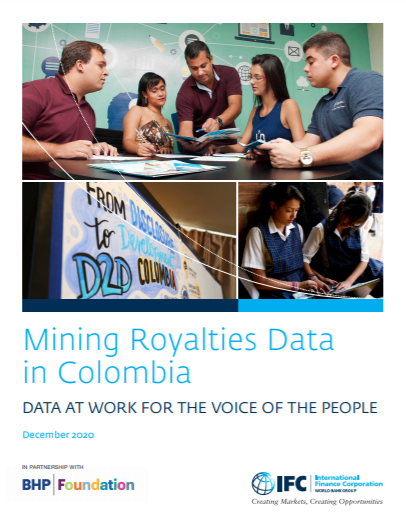
Mining Royalties Data in Colombia: Data at Work for the Voice of the People
In this report, IFC presents a set of recommendations for governments, industry and civil society aimed at improving data disclosure and use practices of mining royalty data to provide citizens with complete, relevant and actionable information. En el informe de D2D Datos de Regalías Mineras en Colombia: Datos en beneficio de los ciudadanos, IFC presenta […]
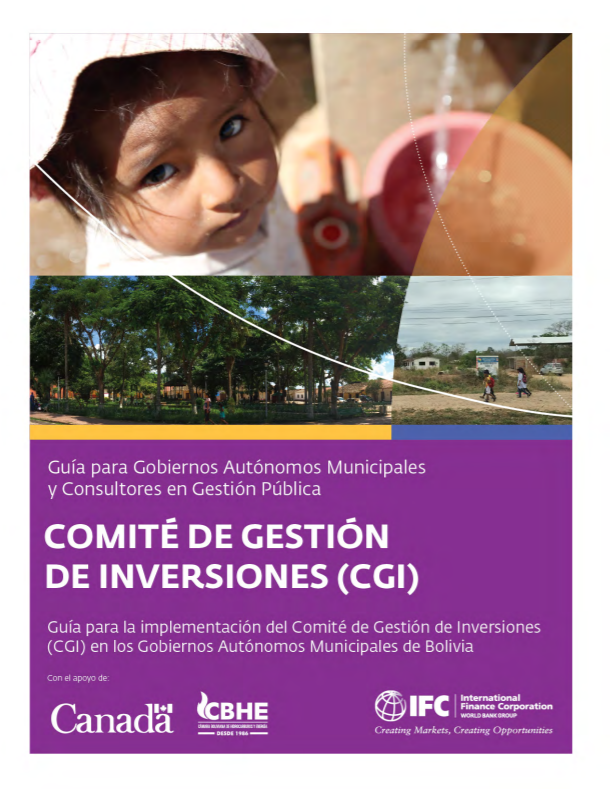
Guidance for Bolivia’s Municipalities on Investing Natural Resource Royalties
Royalties paid by natural resources companies active in Bolivia are intended to support local community development. But often local communities that are impacted by projects do not receive critical benefits to improve their living conditions, such as access to basic services and infrastructure. This can create a difficult operating environment, with host communities looking to […]
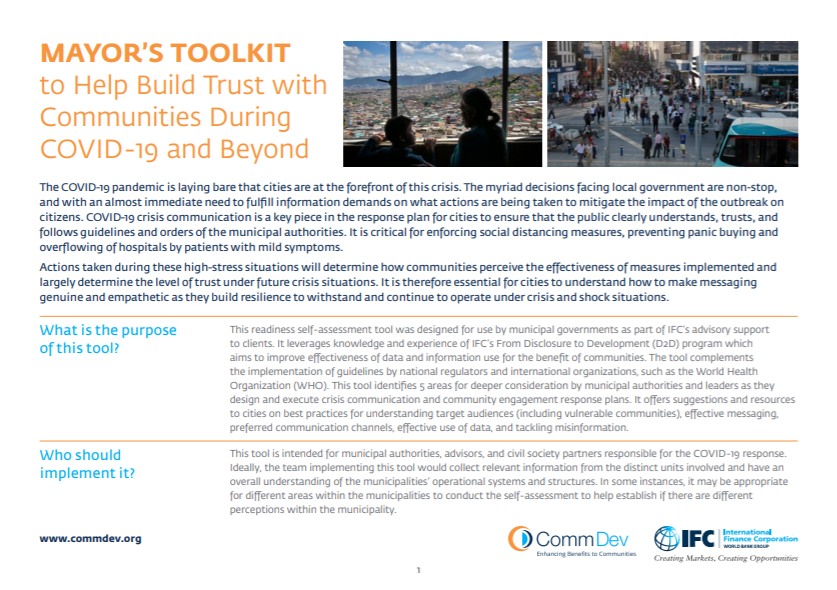
Mayor’s Toolkit to Help Build Trust with Communities During COVID-19 and Beyond
This readiness self-assessment tool was designed for use by municipal governments as part of IFC’s advisory support to clients. It leverages knowledge and experience of IFC’s From Disclosure to Development (D2D) program which aims to improve effectiveness of data and information use for the benefit of communities. The tool complements the implementation of guidelines by […]
The Role of Indigenous People in Major Project Development – Part II Indigenous Ownership of Electricity Infrastructure: A Case Study
This paper aims to help enable the increased adoption of Indigenous equity ownership arrangements by providing a detailed, specific and scalable partnership model, focused on transmission development.
The Role of Indigenous People in Major Project Development: Paths for Indigenous Participation in Electricity Infrastructure
This paper, prepared by the First Nation Major Project Coalition, highlights the growing world examples of Indigenous ownership in major projects including energy infrastructure.
Gender and COVID-19: Key Considerations, Resources and Support for Infrastructure and Natural Resource Companies in Emerging Markets
This note is designed as a quick reference guide to help companies understand how smart, gender-inclusive strategies can bolster the effectiveness of their response to the COVID-19 pandemic.
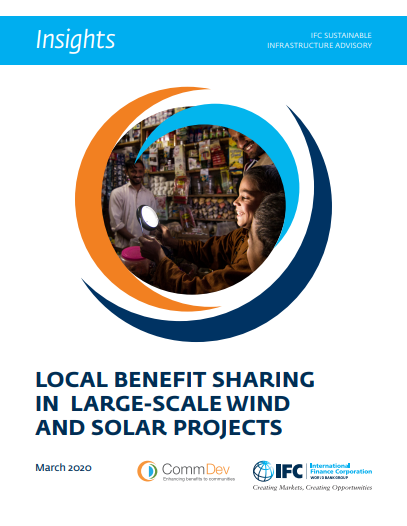
Highlights: Local Benefit Sharing in Large-scale Wind and Solar Projects
These are key highlights from the paper “Local Benefit Sharing in Large-Scale Wind and Solar Projects,” providing insights into the unique social challenges and opportunities for wind and solar developers.
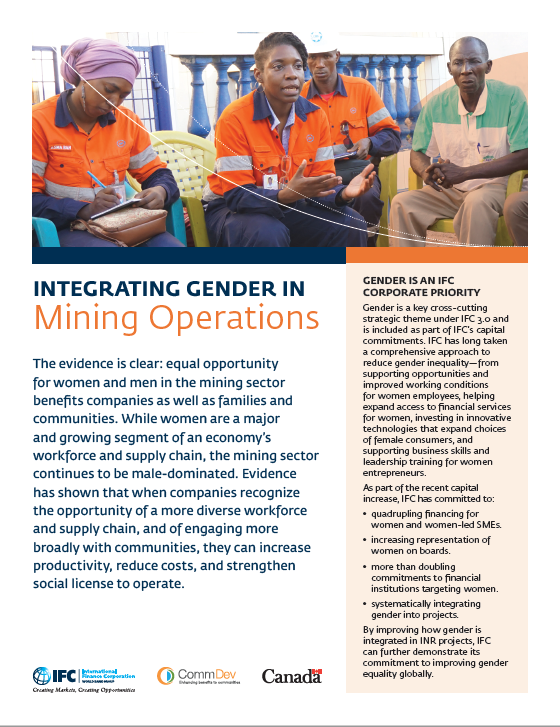
Integrating Gender in Mining Operations
When companies recognize the opportunity of a more diverse workforce and supply chain, and of engaging more broadly with communities, they can increase productivity, reduce costs, and strengthen social license to operate.
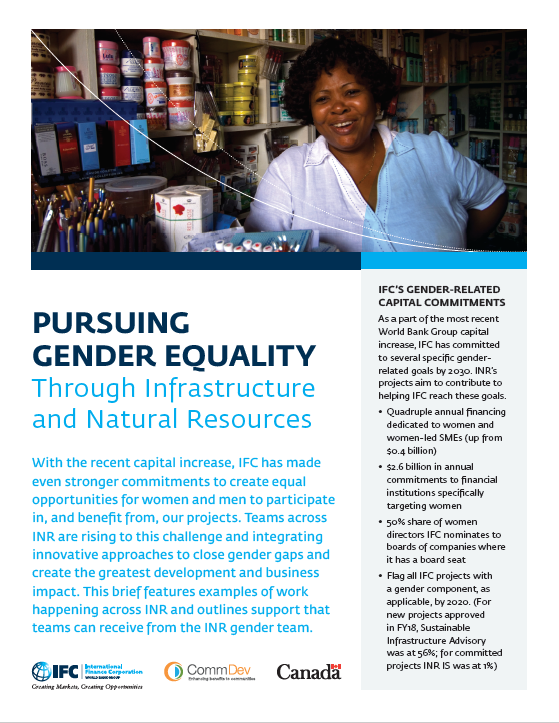
Series: Pursuing Gender Equality Through Infrastructure and Natural Resources
This series of briefs provided tools for infrastructure and natural resources companies to benefit from gender equality.
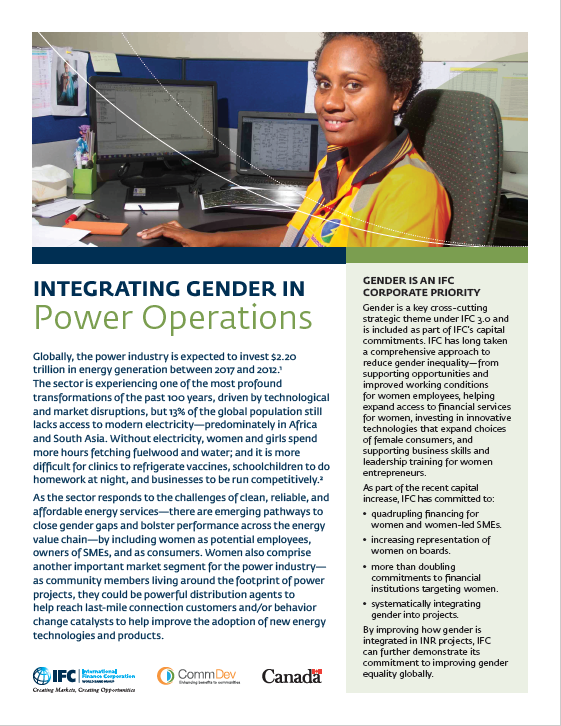
Integrating Gender in Power Operations
As the sector responds to the challenges of clean, reliable, and affordable energy services—there are emerging pathways to close gender gaps and bolster performance across the energy value chain—by including women as potential employees, owners of SMEs, and as consumers.
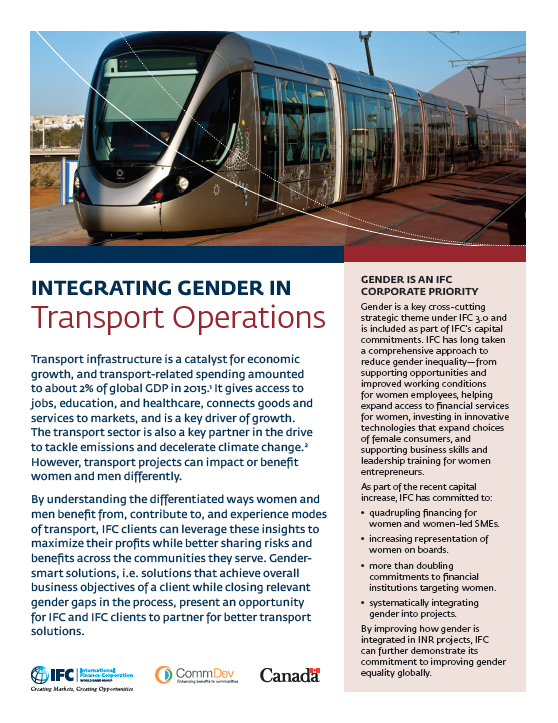
Integrating Gender in Transport Operations
By understanding the differentiated ways women and men benefit from, contribute to, and experience modes of transport, IFC clients can leverage these insights to maximize their profits while better sharing risks and benefits across the communities they serve.
Highlights: Unlocking Data Innovation for Social License in Natural Resources
These are key highlights from the knowledge publication “Unlocking Data Innovation for Social License in Natural Resources” which describes how companies can use new data tools, approaches, and techniques to generate and sustain social license in communities.
Highlights: Data in Action
These are key highlights from the publication “Data in Action” which consolidates the findings of the natural resources data assessments conducted in: Colombia, Ghana, Mongolia, and Peru by the From Disclosure to Development (D2D) program.
Data in Action: Natural Resources Disclosure for People and Progress
his discussion paper consolidates the findings of D2D’s natural resources data assessments conducted in: Colombia, Ghana, Mongolia, and Peru. It describes key challenges and makes recommendations to industry, governments, and civil society that help bridge the existing data gaps and unlock data-enabled opportunities in the natural resources sector.
Transparency for Impact: Lessons from IFC Projects in Peru’s Natural Resources Sector
This document is part of a series of knowledge products by IFC’s From Disclosure to Development program. Two other publications in the series are Unlocking Data Innovation for Social License in Natural Resources and Natural Resource Data: Challenges and Opportunities.
Unlocking Data Innovation for Social License in Natural Resources
This report describes how companies can use new data tools, approaches, and techniques to generate and sustain social license in communities.
Improving the Investment Climate for Renewable Energy: Through Benefit Sharing, Risk Management, and Local Community Engagement
The study provides recommendations on how to improve the investment climate for renewable energy and wind energy, in particular, through benefit sharing, risk management, and local community engagement.
Sustainability Exchange 2019 Conference Program Booklet
IFC’s flagship Sustainability Exchange was held in Dakar June 18-19 to explore how to drive innovation through inclusion. The Exchange convened game changers in infrastructure, natural resources, science, and the arts to challenge assumptions and build a pipeline of sustainable investments across Africa and the globe.
Local Benefit Sharing in Large-Scale Wind and Solar Projects
This paper offers insights into the unique social challenges and opportunities for wind and solar developers. It distills lessons from the experiences of wind and solar companies in securing and maintaining social license to operate by ensuring that local communities share in the benefit from their projects.
Global Youth Wellbeing Index 2017
To offer a comprehensive view of successes and gaps for youth worldwide, the 2017 Global Youth Wellbeing Index includes 29 countries and covers seven domains: gender equality, economic opportunity, education, health, citizen participation, safety and security, and information and communication technology.
Mapping the Oil and Gas Industry to the Sustainable Development Goals: An Atlas
Achieving the SDGs by the target of 2030 will require unprecedented cooperation and collaboration among governments, non-governmental organizations, development partners, the private sector and communities.
Informing Local Communities, Civil Society and Local Government about Oil & Gas
This guide is specifically designed for facilitators and trainers wanting to raise awareness of local communities in oil and gas producing regions.
When Oil, Gas or Mining Arrives in Your Area
The overall goal of this guide is to enable local communities affected by oil, gas and mining projects to carry out constructive, peaceful engagement and negotiation with companies and government, with the aim of achieving sustainable development and improved quality of life.
Social Accountability in Pictures
The document shows in a visual manner IFC’s experience promoting social accountability at the local level in Peru’s extractive regions through the implementation of the MIM (Improving Municipal Investment) Peru project.
Voluntary Responsible Mining Initiatives
This paper aims to help stakeholders better assess the voluntary initiatives space for mining and consider options to increase impact.

Why Agreements Matter
A resource guide for integrating agreements into Communities and Social Performance work at Rio Tinto.
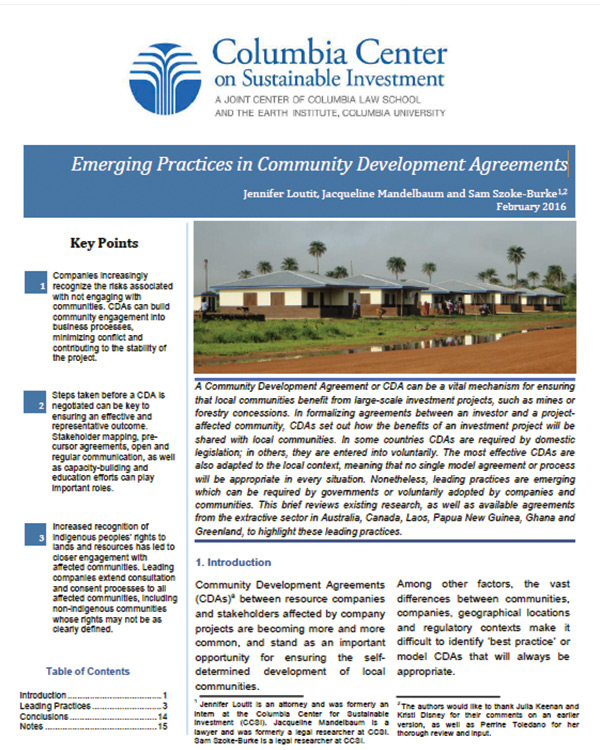
Emerging Practices in Community Development Agreements
A Community Development Agreement or CDA can be a vital mechanism for ensuring that local communities benefit from large-scale investment projects, such as mines or forestry concessions.
Demonstrating Value – A Guide to Responsible Sourcing
Demonstrating value examines the context and drivers for responsible sourcing and provides practical guidance on approaches that companies can take to demonstrate that they are producing materials responsibly.

Managing Community Relations in the Palm Oil Sector
There is growing need for companies in the palm oil sector to earn a social license to operate (SLO) in response to stakeholder concerns and to manage business risks.
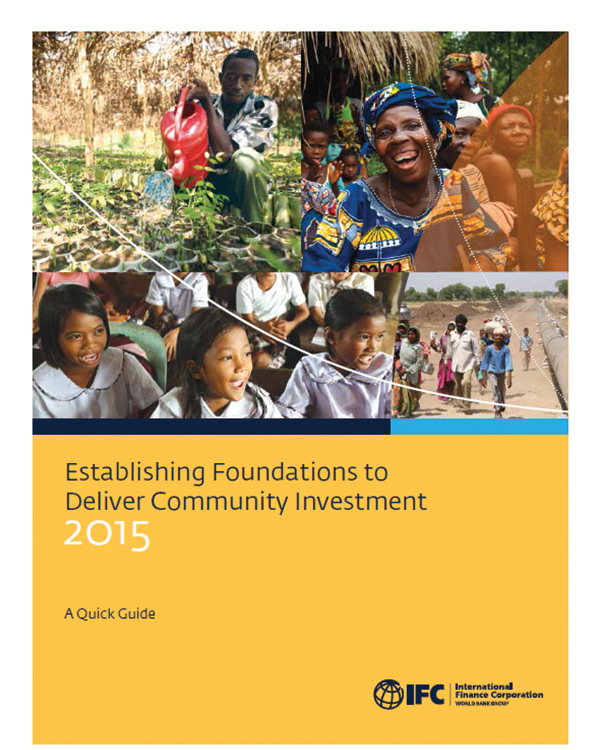
Establishing Foundations to Deliver Community Investment
Providing benefits to communities affected by a project can help a company to obtain and maintain a “social license to operate,” and manage project risks and stakeholder expectations.
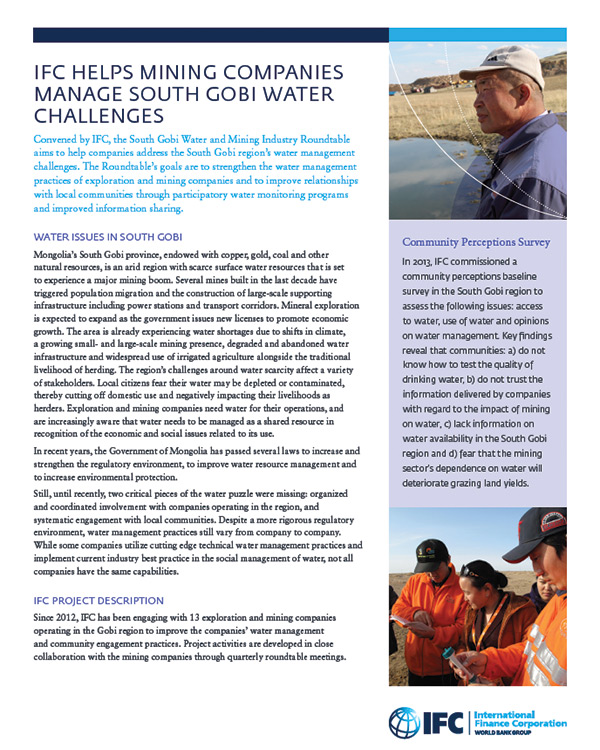
Water and Mining in Mongolia’s South Gobi Region
South Gobi Water and Mining Industry Roundtable About the Program Mongolia’s mining sector is a critical source of investment, accounting for nearly 40 per cent of government revenue, and local economic activity – and a key water user. The extraction, processing, and transportation of mineral resources could potentially bring significant changes to pastoral landscapes and […]
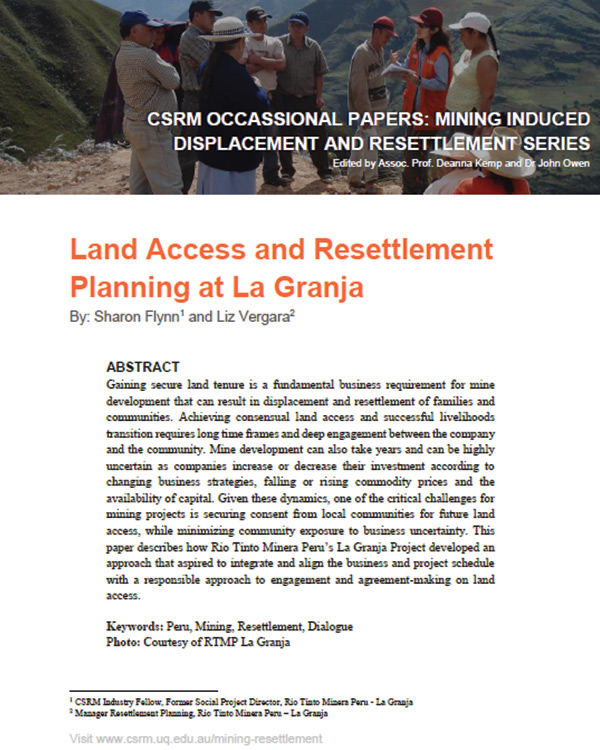
Land Access and Resettlement Planning at la Granja
Gaining secure land tenure is a fundamental business requirement for mine development that can result in displacement and resettlement of families and communities.
Stakeholder Research Toolkit
This toolkit provides step-by-step guidance for companies seeking to measure and monitor their reputation among all stakeholder groups. It has been peer reviewed by the University of Queensland.
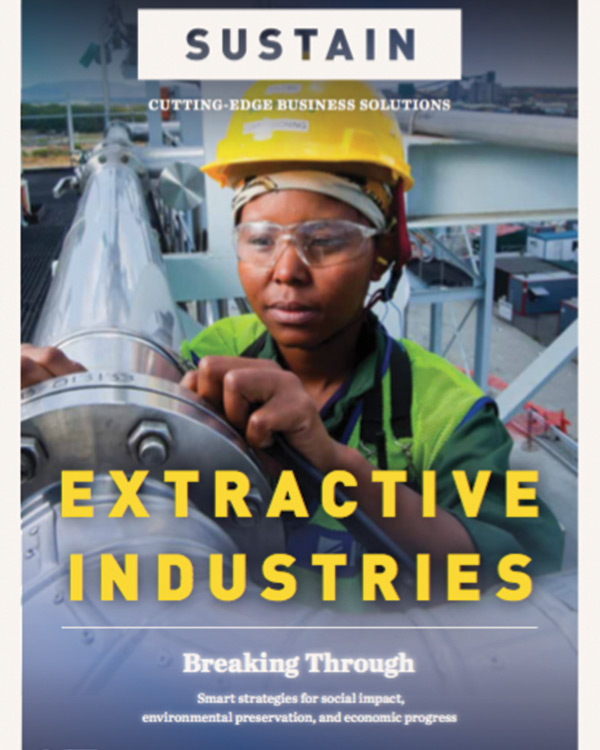
SUSTAIN: Cutting-edge business solutions magazine in Extractive Industries
SUSTAIN magazine presents cutting-edge business solutions for achieving stronger performance while addressing sustainability challenges.
Stakeholder Engagement: Creating Value and Delivering Performance
The publication addresses the idea of how stronger relationships with stakeholders not only secure the business’ “license to operate,” but also contribute to its sustained innovative strength – creating financial and societal value.
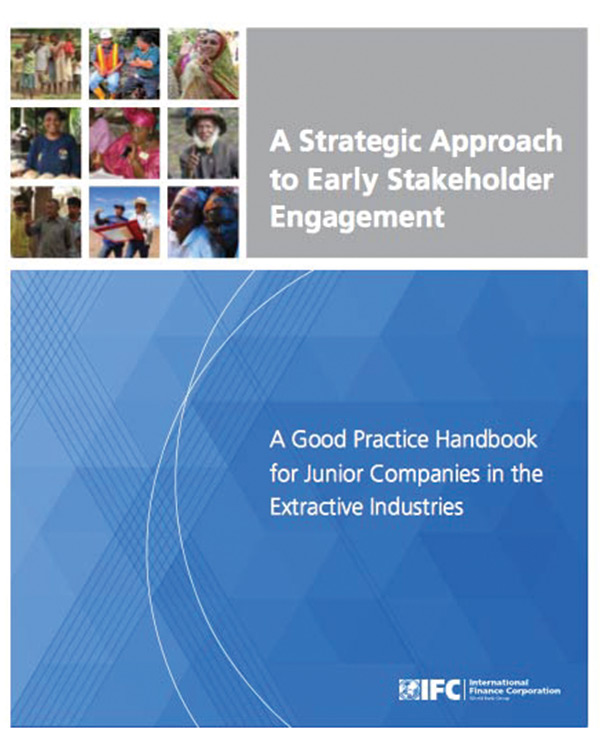
A Strategic Approach to Early Stakeholder Engagement
The handbook takes the reader step-by-step through the process of building trust relationships and gaining and maintaining a social license to operate at each project lifecycle stage.
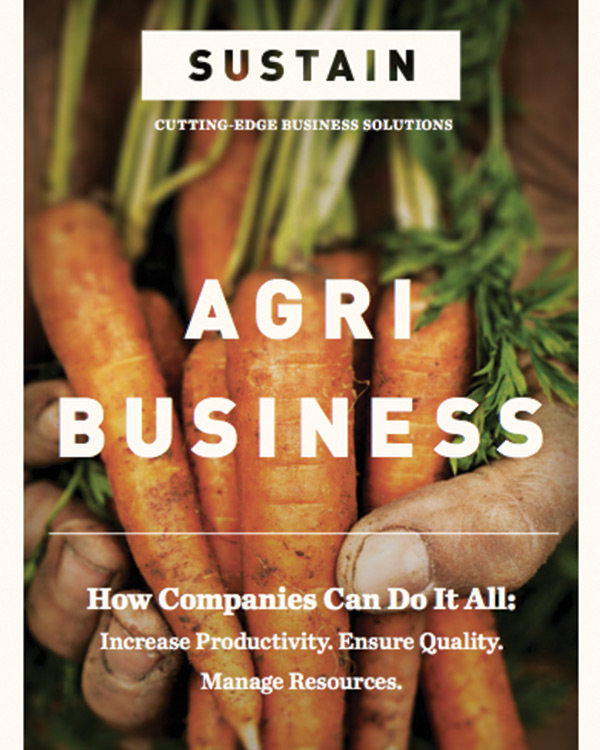
SUSTAIN: Cutting-edge business solutions magazine in Agribusiness
How can companies across the world achieve stronger performance while addressing sustainability challenges? How can they learn from each other?
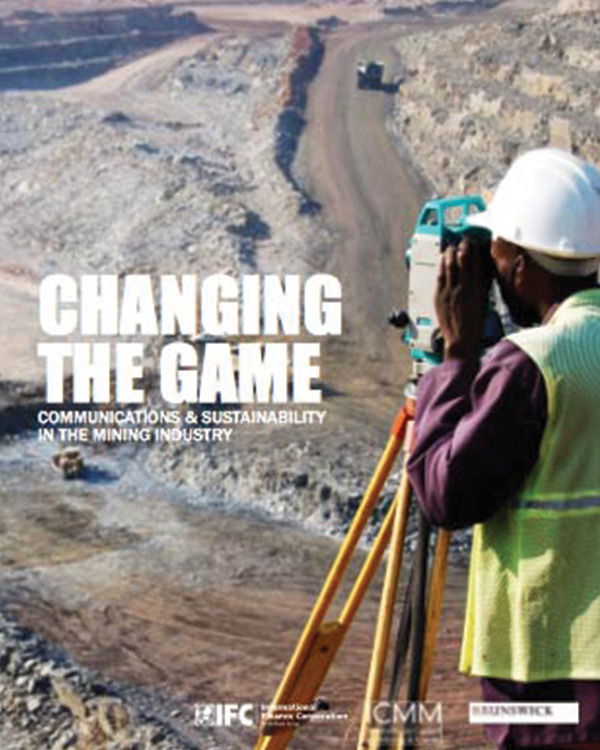
Changing the Game: Communications and Sustainability in the Mining Industry
This report was produced by ICMM, in partnership with the International Finance Corporation (IFC) and Brunswick.
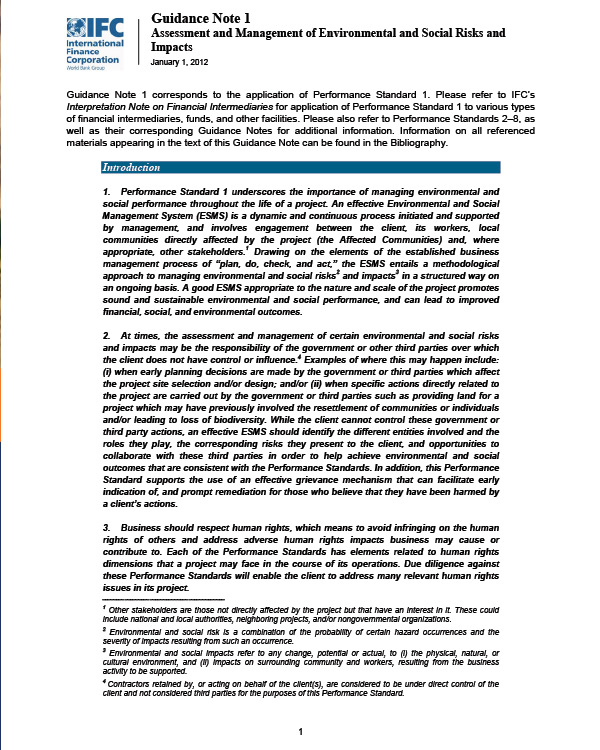
IFC 2012 Guidance Note 1: Assessment and Management of Environmental and Social Risks and Impacts
This guidance note to Performance Standard 1 provides good advice on setting up stakeholder engagement programs and approaches.
Back to Basics: How to Make Stakeholder Engagement Meaningful for Your Company
To help companies get back to the basics, BSR published this report to guide internal discussions on tools and approaches to stakeholder engagement.
