
Community Investment and Partnerships
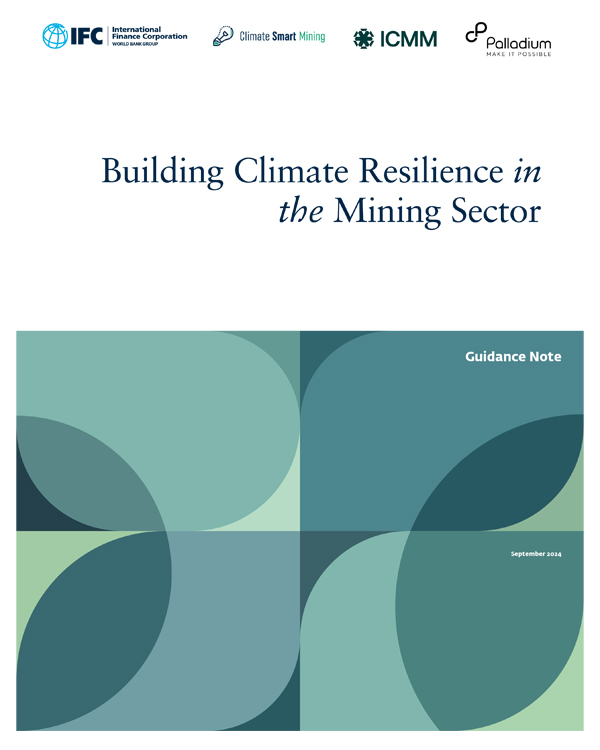
Building Climate Resilience in the Mining Sector
This note offers guidance to mining companies on strengthening climate resilience both inside and outside the mine fence, guided by the best available scientific literature and tools.
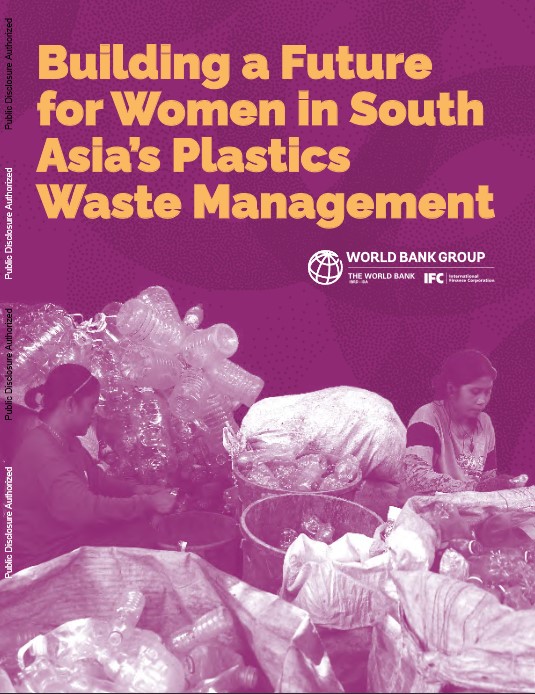
Building a Future for Women in South Asia’s Plastics Waste Management
This report examines the role of women in South Asia’s plastic waste management systems and the challenges they face, and provides recommendations for collaborative action to improve and safeguard women’s livelihoods in the sector.
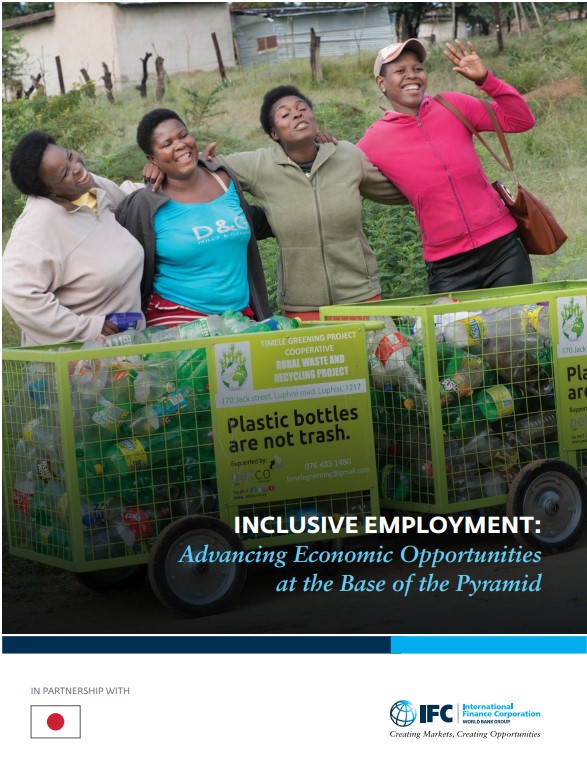
Inclusive Employment: Advancing Economic Opportunities at the Base of the Pyramid
There are 4.5 billion people living at the base of the pyramid worldwide, surviving on low incomes and lacking access to goods, services, and opportunities. Workers at the base are often in the informal sector or low-skill jobs with limited earning. By adopting inclusive employment practices that enhance advancement, and empowerment of these workers, companies have a critical role in expanding access to better livelihoods for these workers.
Social Sustainability in Development: Meeting the Challenges of the 21st Century
This publication seeks to advance the concept of social sustainability and sharpen its analytical foundations. The book emphasizes social sustainability’s four key components: social cohesion, inclusion, resilience, and process legitimacy. By identifying interventions that work to promote the components of social sustainability and highlighting the evidence of their links to key development outcomes, this book provides a foundation for using social sustainability to help address the many challenges of our time.
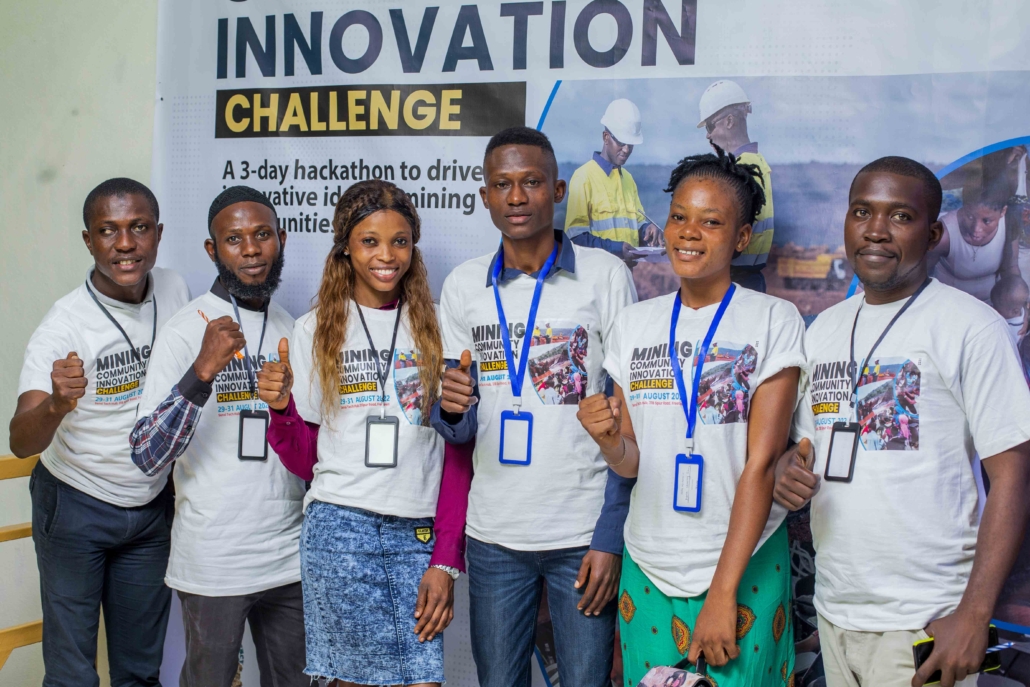
Factsheet | Disclosure to Development ‘D2D’ Sierra Leone Project
IFC’s ‘From Disclosure to Development’ (D2D) Project in Sierra Leone strengthens the digital entrepreneurship ecosystem, with a focus on sustainably supporting mining communities.
Brochure | Sustainability-linked Finance
Sustainability-linked finance (SLF) is a powerful tool for mobilizing capital as the world moves towards a greener global future. SLF incentivizes companies to pursue ambitious, long-term environmental and social goals, and its use can help countries achieve the 2030 UN Sustainable Development Goals.
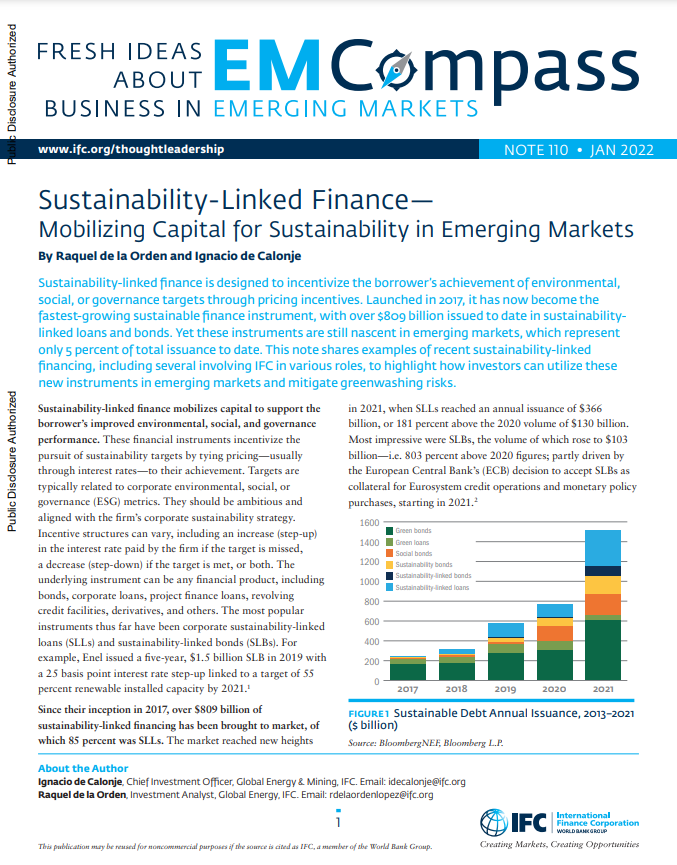
Sustainability-Linked Finance—Mobilizing Capital for Sustainability in Emerging Markets
This note shares examples of recent sustainability-linked financing, including several involving IFC in various roles, to highlight how investors can utilize these new instruments in emerging markets and mitigate greenwashing risks.
The Business Case for Gender-Responsive Climate-Smart Mining
This document illustrates how gender-responsive climate-smart mining (CSM) strategies are good for business and good for the planet. It outlines entry points for gender considerations within the pillars of the CSM Initiative and enlists recommendations for different stakeholders such as companies, government and civil society to engage.
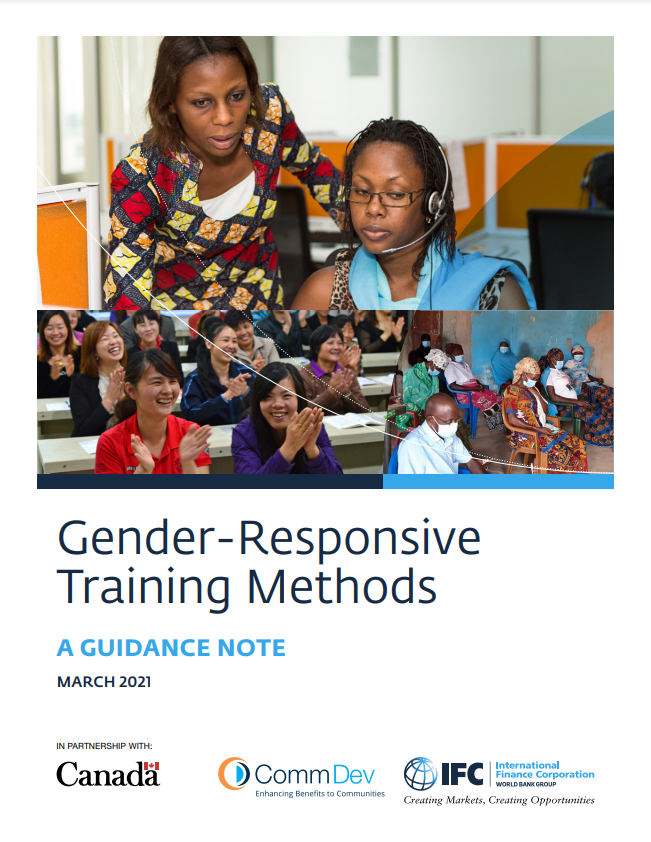
Gender-Responsive Training Methods: A Guidance Note
This Guidance Note highlights how training initiatives can respond to women and men’s different needs and learning preferences. It is intended to strengthen the skills and practice of training providers who run technical business courses for entrepreneurs—whether face to face, or virtually.
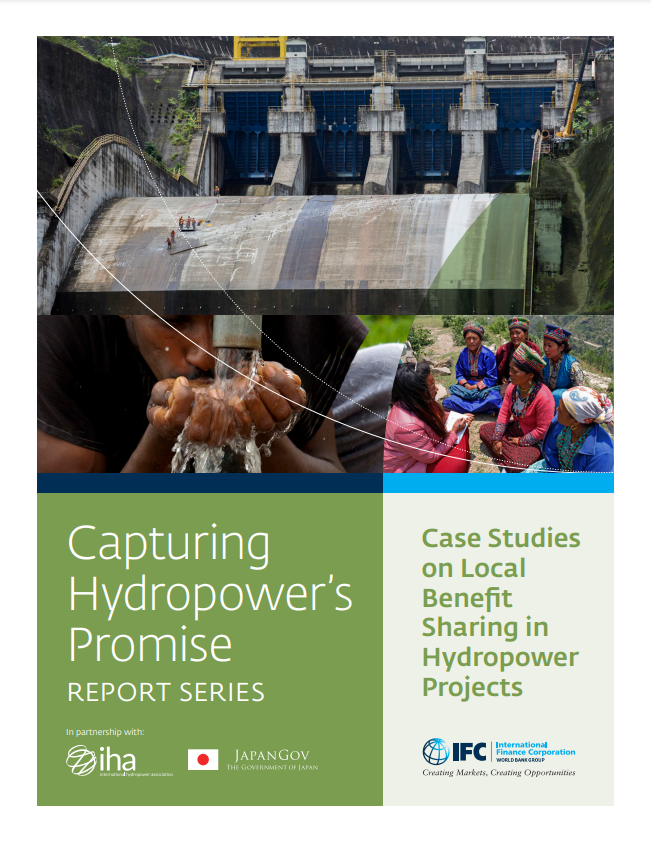
Capturing Hydropower’s Promise: Report Series
The series Capturing Hydropower’s Promise features suggested approaches on implementing local benefit sharing in hydropower projects, along with good practice examples.
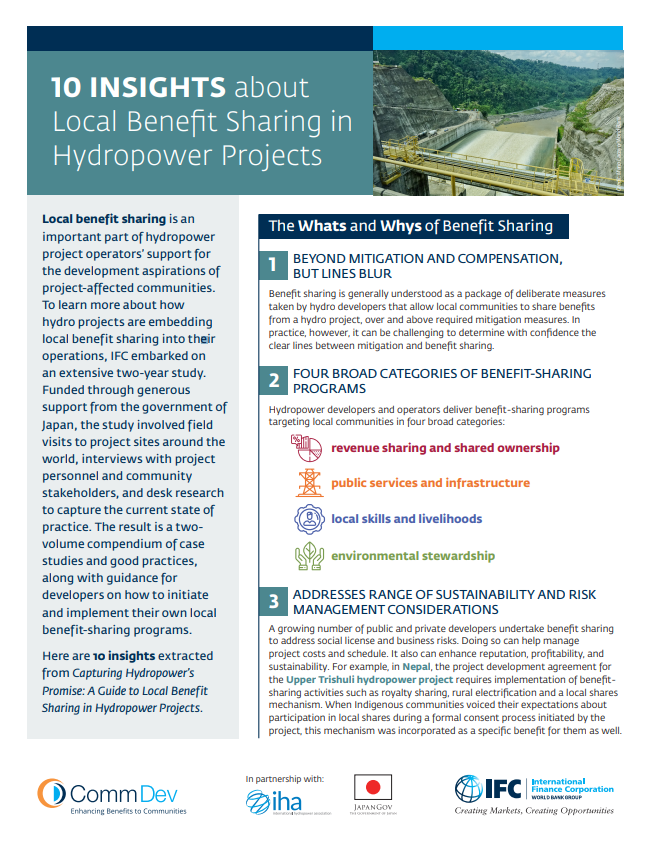
10 Insights about Local Benefit Sharing in Hydropower Projects
This brief highlights 10 insights extracted from the publication Capturing Hydropower’s Promise: A Guide to Local Benefit Sharing in Hydropower Projects.
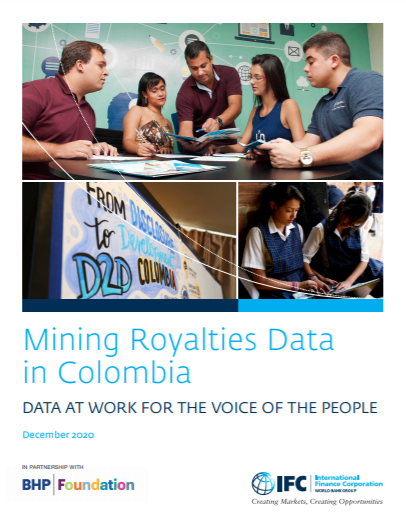
Mining Royalties Data in Colombia: Data at Work for the Voice of the People
In this report, IFC presents a set of recommendations for governments, industry and civil society aimed at improving data disclosure and use practices of mining royalty data to provide citizens with complete, relevant and actionable information. En el informe de D2D Datos de Regalías Mineras en Colombia: Datos en beneficio de los ciudadanos, IFC presenta […]
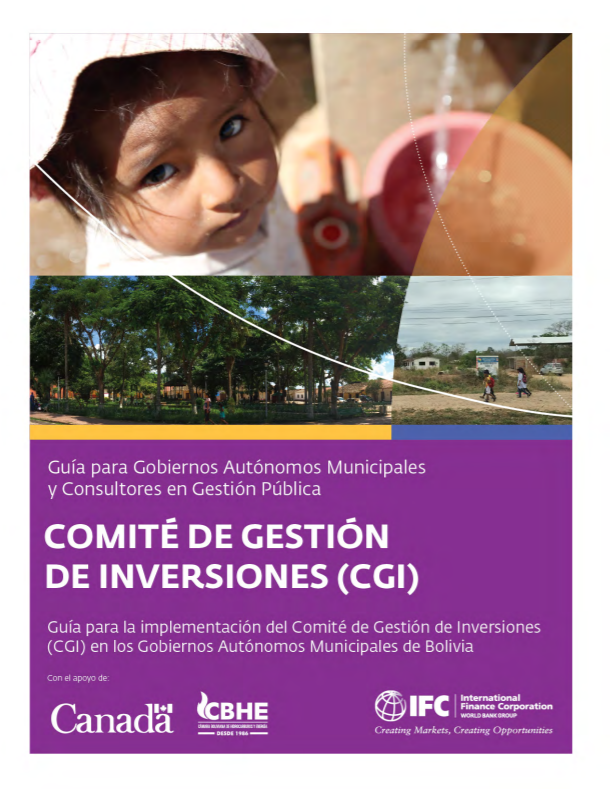
Guidance for Bolivia’s Municipalities on Investing Natural Resource Royalties
Royalties paid by natural resources companies active in Bolivia are intended to support local community development. But often local communities that are impacted by projects do not receive critical benefits to improve their living conditions, such as access to basic services and infrastructure. This can create a difficult operating environment, with host communities looking to […]
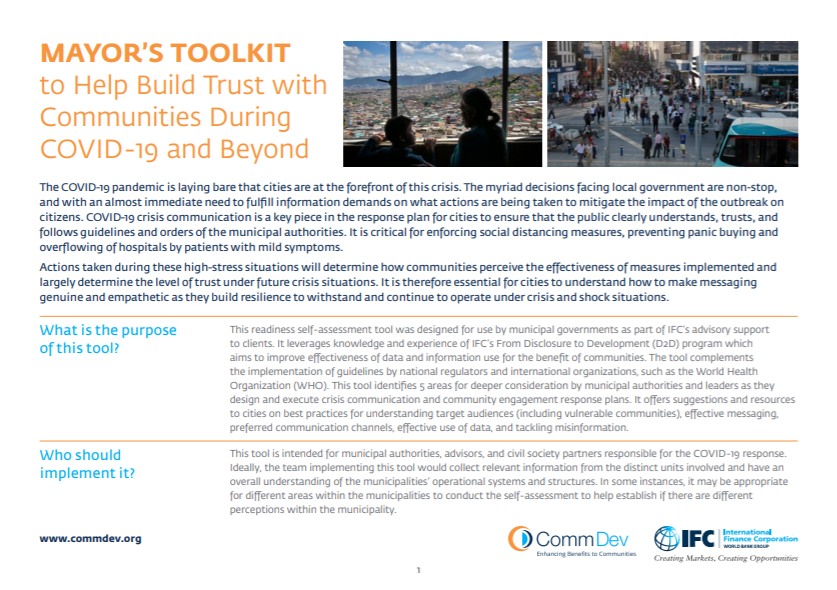
Mayor’s Toolkit to Help Build Trust with Communities During COVID-19 and Beyond
This readiness self-assessment tool was designed for use by municipal governments as part of IFC’s advisory support to clients. It leverages knowledge and experience of IFC’s From Disclosure to Development (D2D) program which aims to improve effectiveness of data and information use for the benefit of communities. The tool complements the implementation of guidelines by […]
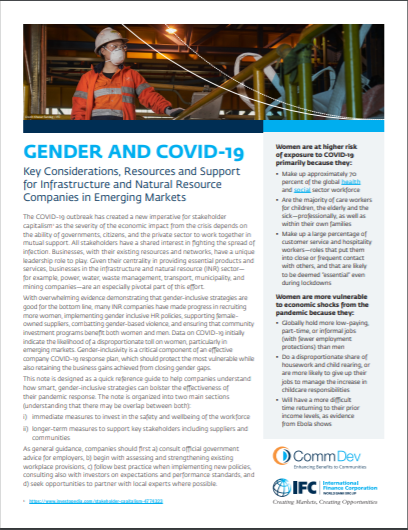
Gender and COVID-19: Key Considerations, Resources and Support for Infrastructure and Natural Resource Companies in Emerging Markets
This note is designed as a quick reference guide to help companies understand how smart, gender-inclusive strategies can bolster the effectiveness of their response to the COVID-19 pandemic.
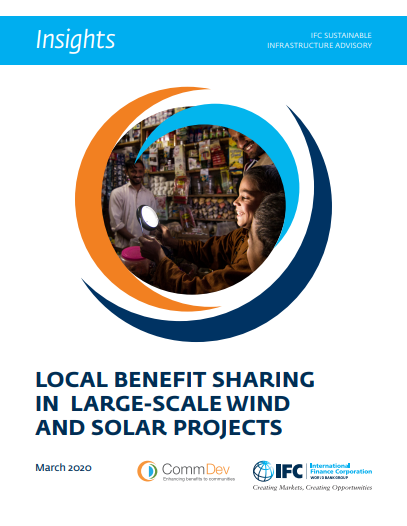
Highlights: Local Benefit Sharing in Large-scale Wind and Solar Projects
These are key highlights from the paper “Local Benefit Sharing in Large-Scale Wind and Solar Projects,” providing insights into the unique social challenges and opportunities for wind and solar developers.
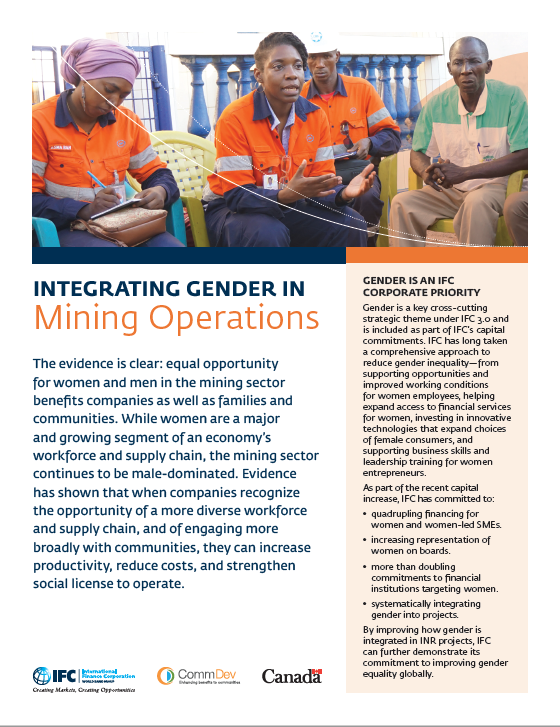
Integrating Gender in Mining Operations
When companies recognize the opportunity of a more diverse workforce and supply chain, and of engaging more broadly with communities, they can increase productivity, reduce costs, and strengthen social license to operate.
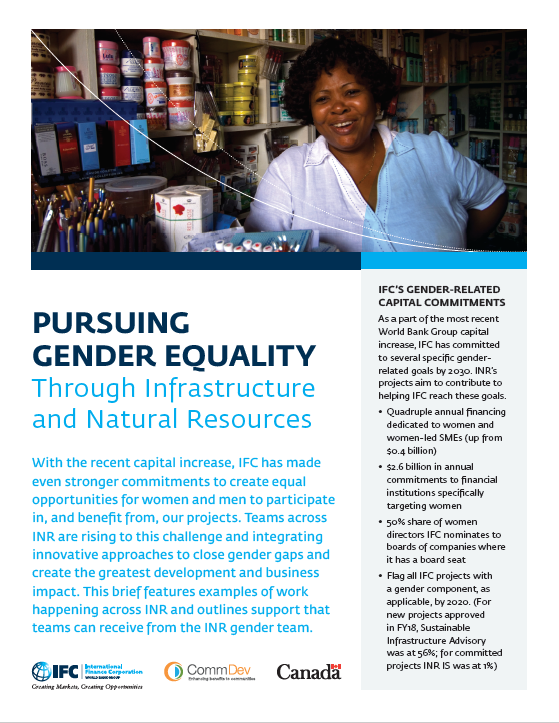
Series: Pursuing Gender Equality Through Infrastructure and Natural Resources
This series of briefs provided tools for infrastructure and natural resources companies to benefit from gender equality.
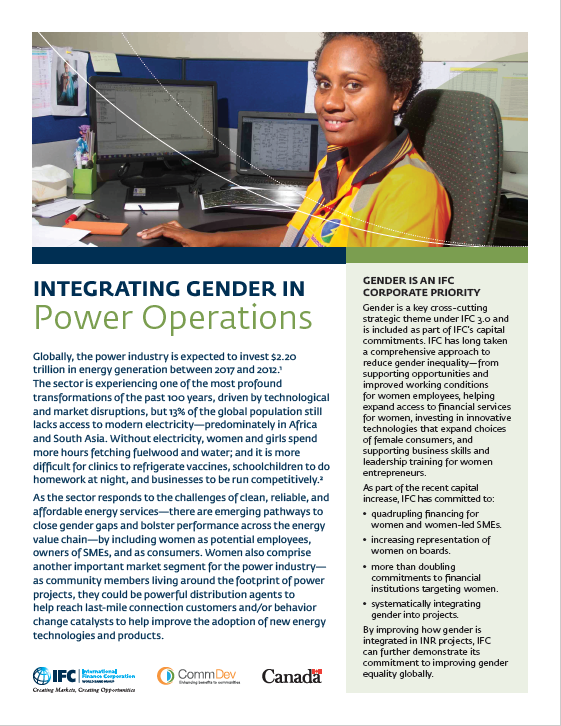
Integrating Gender in Power Operations
As the sector responds to the challenges of clean, reliable, and affordable energy services—there are emerging pathways to close gender gaps and bolster performance across the energy value chain—by including women as potential employees, owners of SMEs, and as consumers.
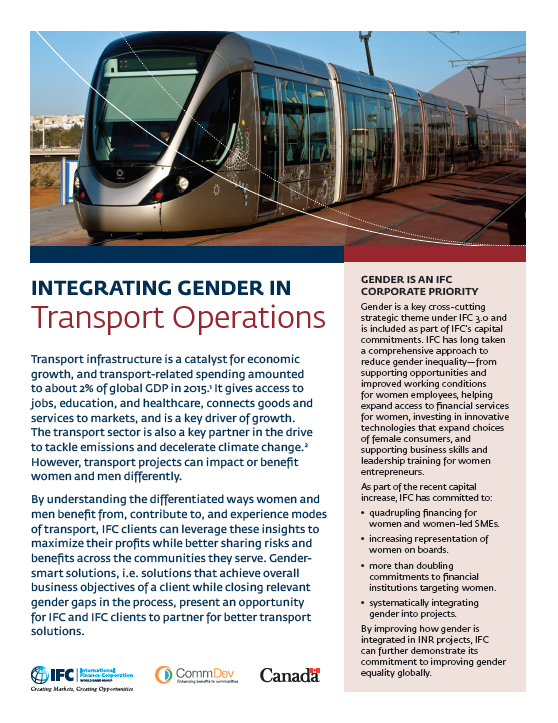
Integrating Gender in Transport Operations
By understanding the differentiated ways women and men benefit from, contribute to, and experience modes of transport, IFC clients can leverage these insights to maximize their profits while better sharing risks and benefits across the communities they serve.
Highlights: Unlocking Data Innovation for Social License in Natural Resources
These are key highlights from the knowledge publication “Unlocking Data Innovation for Social License in Natural Resources” which describes how companies can use new data tools, approaches, and techniques to generate and sustain social license in communities.
Highlights: Data in Action
These are key highlights from the publication “Data in Action” which consolidates the findings of the natural resources data assessments conducted in: Colombia, Ghana, Mongolia, and Peru by the From Disclosure to Development (D2D) program.
Highlights: Transparency for Impact
These are key highlights from the publication “Transparency for Impact” which intends to help natural resources companies, government agencies, and development practitioners, design and implement transparency-related interventions.
Data in Action: Natural Resources Disclosure for People and Progress
his discussion paper consolidates the findings of D2D’s natural resources data assessments conducted in: Colombia, Ghana, Mongolia, and Peru. It describes key challenges and makes recommendations to industry, governments, and civil society that help bridge the existing data gaps and unlock data-enabled opportunities in the natural resources sector.
Transparency for Impact: Lessons from IFC Projects in Peru’s Natural Resources Sector
This document is part of a series of knowledge products by IFC’s From Disclosure to Development program. Two other publications in the series are Unlocking Data Innovation for Social License in Natural Resources and Natural Resource Data: Challenges and Opportunities.
Unlocking Data Innovation for Social License in Natural Resources
This report describes how companies can use new data tools, approaches, and techniques to generate and sustain social license in communities.
Improving the Investment Climate for Renewable Energy: Through Benefit Sharing, Risk Management, and Local Community Engagement
The study provides recommendations on how to improve the investment climate for renewable energy and wind energy, in particular, through benefit sharing, risk management, and local community engagement.
[Draft for Discussion] A Guide to Community Engagement for Public-Private Partnerships
Good community engagement strengthens PPPs by giving communities voice, enfranchising and mobilizing them to enhance positive impacts while reducing potential negative impacts. This new guide explains how to engage with the communities that will be affected by a PPP project. Aimed at improving development outcomes, the guide provides practical, systematic advice for PPP practitioners. It […]

Sustainability Exchange 2019 Conference Program Booklet
IFC’s flagship Sustainability Exchange was held in Dakar June 18-19 to explore how to drive innovation through inclusion. The Exchange convened game changers in infrastructure, natural resources, science, and the arts to challenge assumptions and build a pipeline of sustainable investments across Africa and the globe.
Local Benefit Sharing in Large-Scale Wind and Solar Projects
This paper offers insights into the unique social challenges and opportunities for wind and solar developers. It distills lessons from the experiences of wind and solar companies in securing and maintaining social license to operate by ensuring that local communities share in the benefit from their projects.
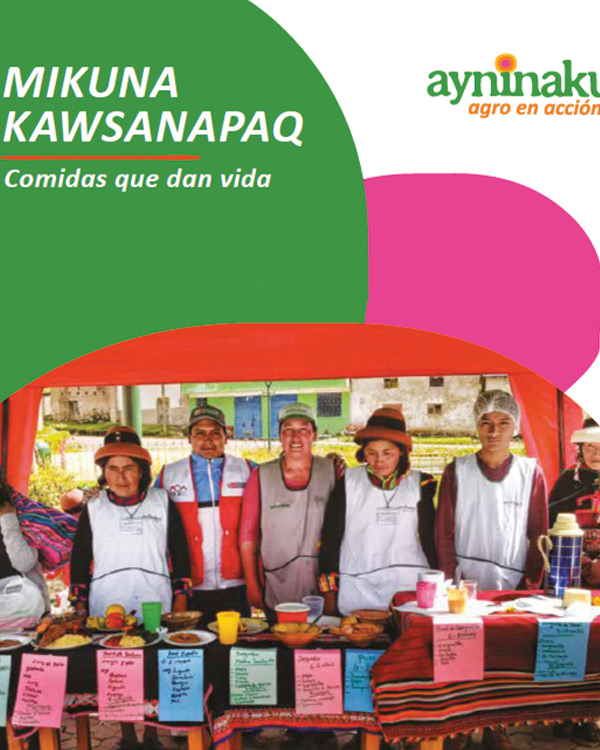
Mikuna Kawsanapaq Recipe Book
This recipe book includes the most innovative nutritious menus created by farmer families from Apurimac.
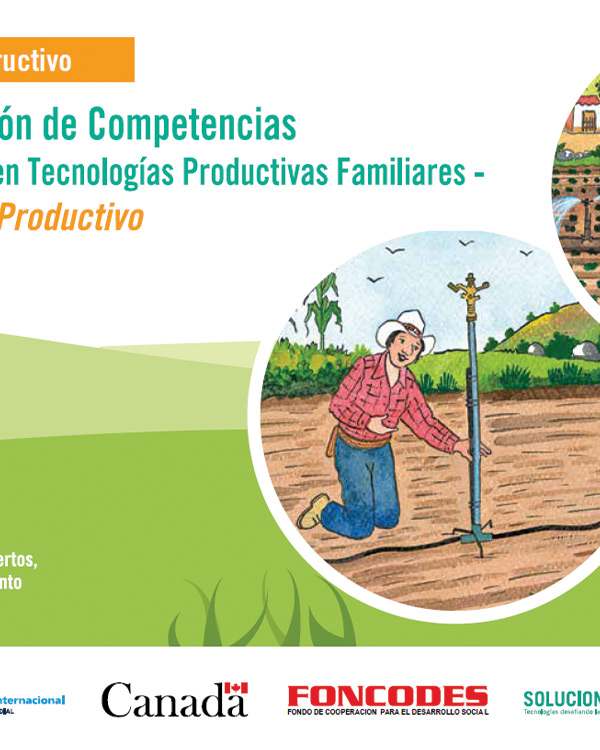
Certification for Yachachiq
This guide was developed in partnership with the Government of Peru to help Yachachiqs (local leaders on small-scale agriculture) understand and become familiar with a certification process.
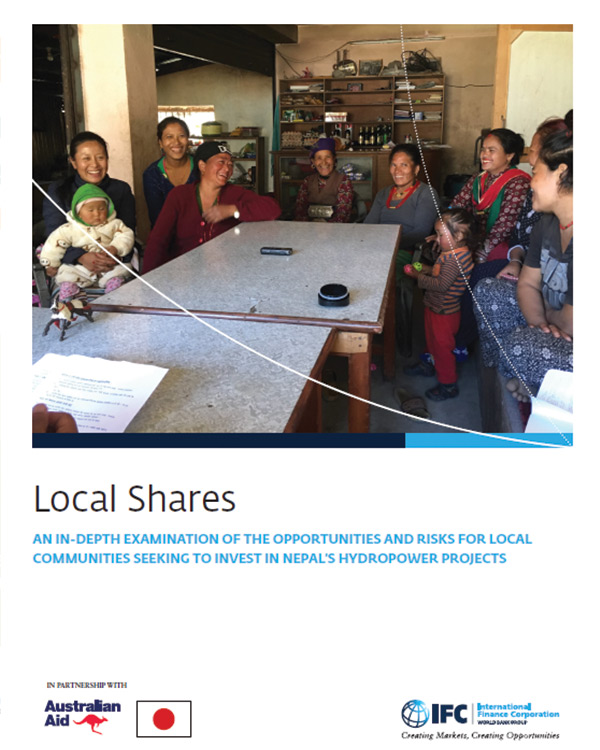
Local Shares: An In-depth Examination of the Opportunities and Risks for Local Communities Seeking to Invest in Nepal’s Hydropower Projects
Nepal is leading the way in benefit sharing with its Local Shares phenomenon that sees up to 10% of shares in hydropower developments set aside for purchase by people in affected communities.
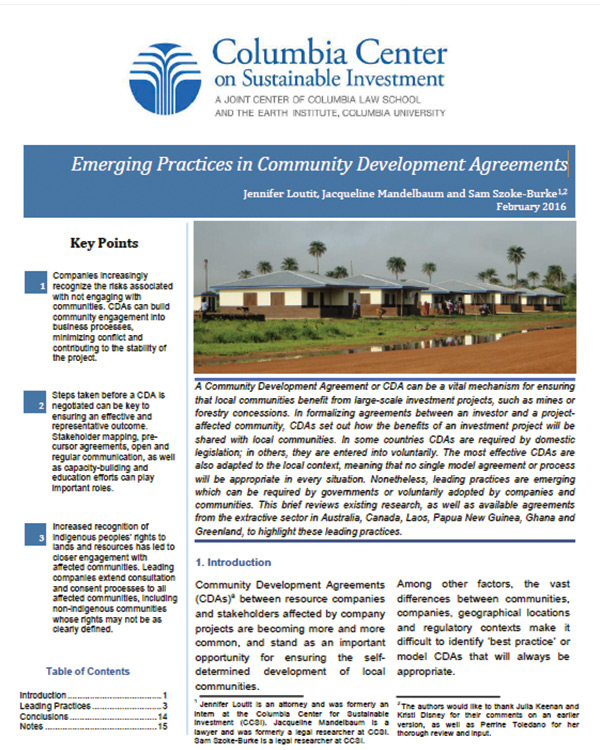
Emerging Practices in Community Development Agreements
A Community Development Agreement or CDA can be a vital mechanism for ensuring that local communities benefit from large-scale investment projects, such as mines or forestry concessions.

Managing Community Relations in the Palm Oil Sector
There is growing need for companies in the palm oil sector to earn a social license to operate (SLO) in response to stakeholder concerns and to manage business risks.
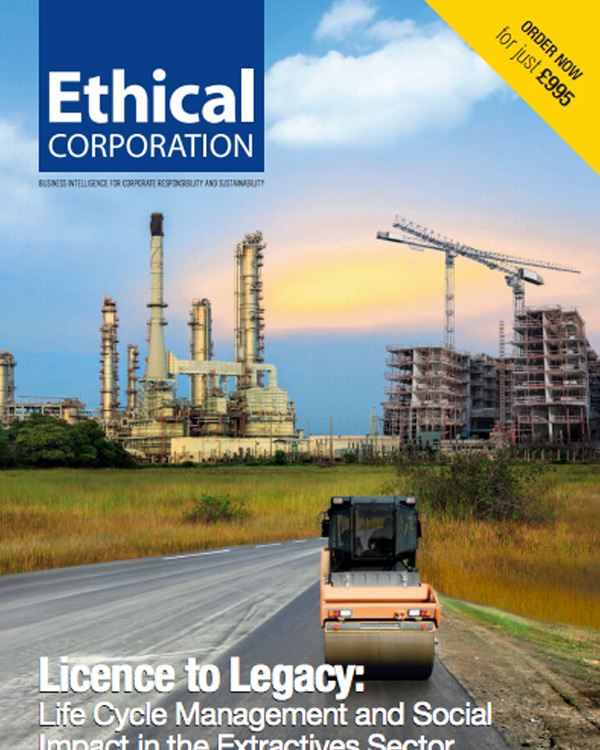
Licence to Legacy: Life Cycle Management and Social Impact in the Extractives Sector
The Anglo American Mine Closure Toolbox was formulated and developed around the concept of achieving sustainable closure through a multi-stakeholder approach based on an early forward-looking closure vision.
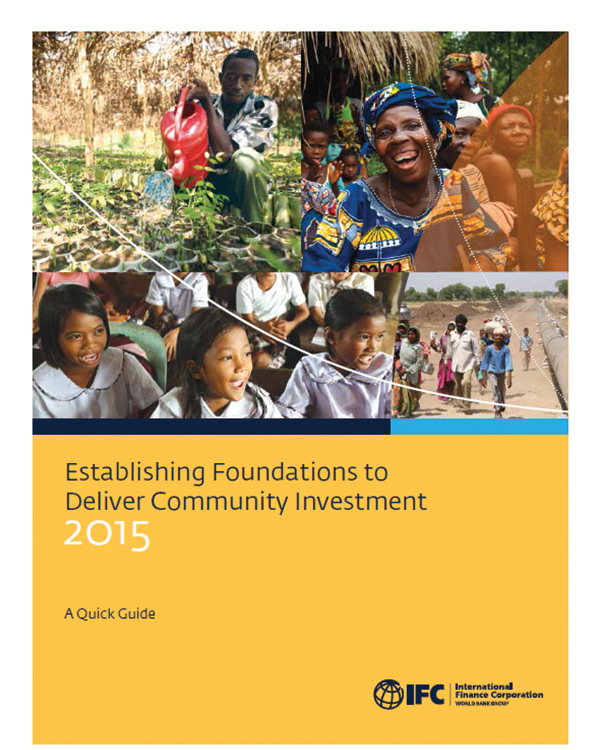
Establishing Foundations to Deliver Community Investment
Providing benefits to communities affected by a project can help a company to obtain and maintain a “social license to operate,” and manage project risks and stakeholder expectations.
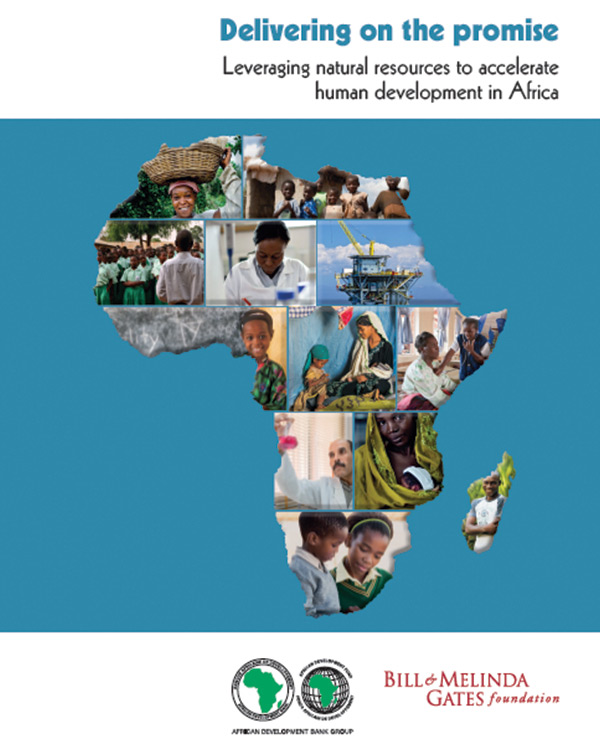
Delivering on the Promise: Leveraging natural resources to accelerate human development in Africa
Most governments have expressed a commitment to turn revenues from new natural resource discoveries into outcomes that matter for their citizens: better health, better education, and access to quality social services.
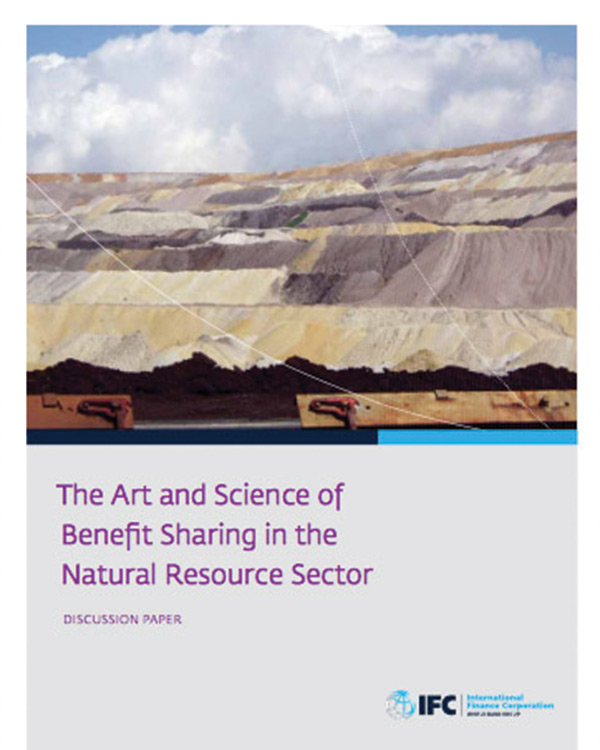
The Art and Science of Benefit Sharing in the Natural Resource Sector
If developed and managed appropriately, a country’s oil, gas, and mineral resources can make a major contribution to economic development and poverty alleviation.
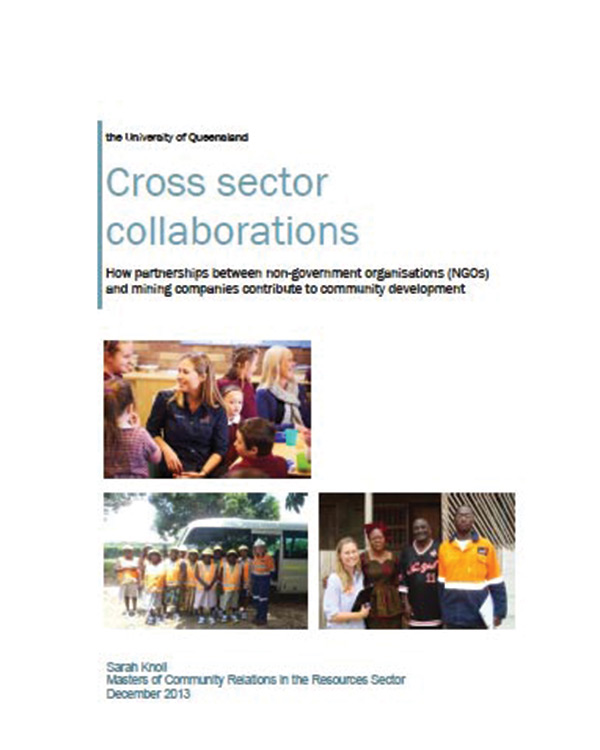
How Partnerships between Non-Government Organizations (NGOs) and Mining Companies Contribute to Community Development
Mining companies and non-governmental organisations (NGOs) are increasingly called to collaborate in the community development space.
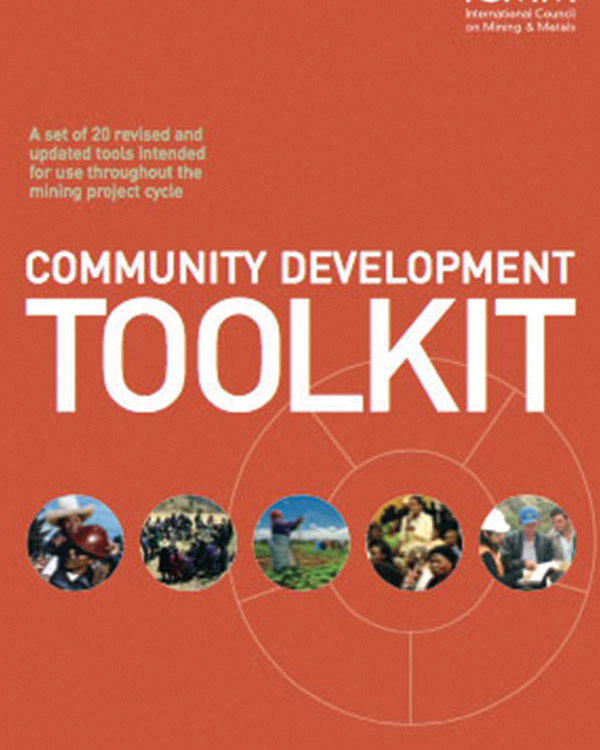
Community Development Toolkit
This document updates and replaces the original Community Development Toolkit (CDT), which was produced in 2005.
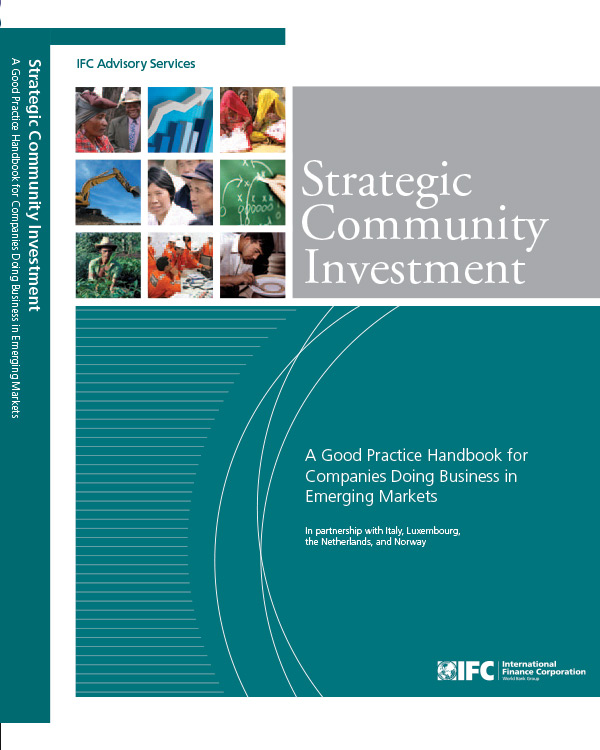
Strategic Community Investment (SCI): A Good Practice Handbook & Quick Guide for Companies Doing Business in Emerging Markets
The content of the Handbook is organized around seven key areas comprising a comprehensive strategic planning framework for community investment.
